
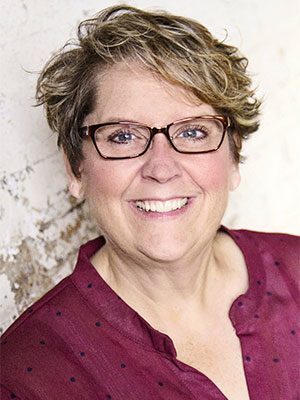
Life has come full circle for Kim Suedbeck.
“I started babysitting at a young age. I loved kids, and I always thought I was going to be a teacher – and I never changed my mind,” says Suedbeck, a clinical assistant professor in the Department of Special and Early Education.
“When I was in high school, they had a child care class so you could help with babysitting, and they also had a special class that not many people knew about but, for some reason, I found out about it,” she adds. “It was kind of like Child Care II, and you actually got to go into schools, so I begged to take that class.”
Permission granted.
Suedbeck was partnered with a teacher “who’s actually a friend of mine to this day, and he’s the one who really prompted me to go into special education because he was a special ed teacher, and he said, ‘You have a knack for it.’ ”
“He got me involved in Special Olympics and, honestly, I never looked back,” she says. “I never thought of any other career than teaching.”
Four decades after her professional life in education began in 1984, her résumé brims with multiple K-12 roles in special education (teaching and supervising) and as an assistant principal, associate principal and assistant superintendent.
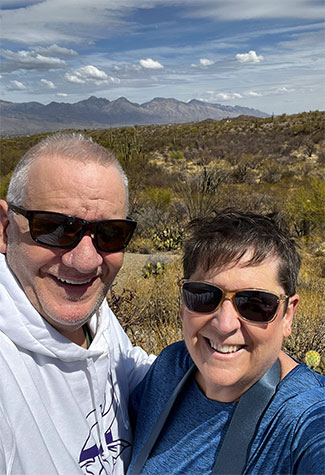
Meanwhile, Suedbeck is an associate of Arlington Heights-based HYA, a network of education experts who consult school boards, trustees and administrators, and has facilitated and participated in searches for superintendents and other district leaders.
Her main role with HYA is to assist in strategic plans and curriculum work with special education cooperatives and school districts.
Underperforming school districts have benefited from her instructional coaching, and the Illinois Association of School Administrators retained her as a professional development coordinator.
And, since 2016, she has taught in the NIU College of Education – and, in the last two years, has returned to where it all began.
“I started as an adjunct in the Department of Leadership, Educational Psychology and Foundations, and I did a lot of Principal Prep coursework and absolutely, thoroughly enjoyed that,” says Suedbeck, who earned her M.S.Ed. in Educational Administration from NIU in 2005. “I was an administrator at the time, so it made total sense.”
Retirement from Hononegah Community High School District 207, where she was assistant superintendent and worked alongside Lynn Gibson, then-superintendent and now NIU colleague, allowed her to join the Department of Curriculum and Instruction (CI) as a clinical assistant professor in 2018.
Three years later, CI began sharing Suedbeck with the Department of Special and Early Education (SEED). One year after that, in 2023, Suedbeck “made the jump over to SEED, which is where my roots are. I was thrilled to be able to do that.”
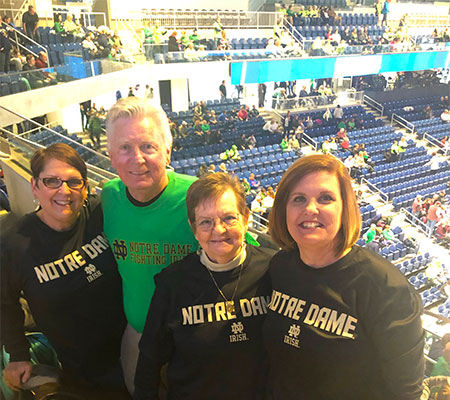
“Lots of methods classes,” she says. “I consider myself a practitioner, and so I have the boots-on-the-ground practice. I like to give real-life examples to my students.”
She has plenty of those, and she doesn’t varnish her reality, which contains episodes of chairs being hurled in anger or frustration inside classrooms.
Knowing and delivering the curriculum is important, she adds, but so is the drive and the heart for teaching.
“It’s hard being a teacher, and it’s really hard being a special education teacher, but we have to have those high expectations. We have to fight for our students and for our schools to be the safe place that they can land and they can be vulnerable,” she says. “That’s what I preach.”
While teaching throughout the K-12 spectrum – “I always tell people that I have a great deal of varied experience; every level except for the little babies,’ because I never did early childhood,” she says – Suedbeck spent the majority of her time in secondary school settings.
Most of her students were adolescent boys, she says, and most had significant cognitive and developmental delays or exceptionally challenging behaviors and emotional disorders.
“That’s where I found my niche. I taught the hardest students,” she says.
“Other than teaching them the typical reading and writing and math, and all the things you’re supposed to, I always felt that I wanted my students to be able to thrive. That was my goal,” she adds.
“No matter how severe, either cognitively impaired or behaviorally impaired, I always had goals that they were going to somehow be able to function in society. Some, obviously, would have to have a lot of care, but I wanted them to be able to enjoy life to the fullest. That was always what I would strive for: high expectations, no matter how impacted the student. High expectations.”
In return, Suedbeck says, her students nurtured her.
“The students taught me empathy. Tenacity. How you can work through the most difficult challenges and get to the other side. It’s not always pretty,” she says, “but if you’re hardworking, with love and compassion, I did find that so many times.”
Kindness is key, she says, as – again – is establishing a safe learning environment and the insistence of excellence as the educational outcome.
“We need to have compassion as educators. I just fell in love with my students, and I would tell my husband, ‘I want to bring them home with me – if I could just bring them home and have more time with them.’ Many of my students were either in group homes or in foster care situations, so a lot of them didn’t have the upbringing we think would be typical,” she says.
“But most importantly, we have to have high expectations,” she adds. “If we lower our expectations to make it easier, then in the long run, it’s not easier for the students.”

NIU’s future teachers have taken her message to heart, Suedbeck says, and she counts them as her favorite part of teaching in higher education.
“I see our students grow over the semester from not understanding to lightbulb moments. I always tell them, ‘You’re going to get it. It’s going to come, I promise you. You need a few more things under your belt before they come,’ but those lightbulb moments are really cool for me to see,” she says. “
“And the excitement – especially when I see students in Block 3, because they’re getting ready to go on student-teaching. They’re excited to be able to go, and they’re nervous, but they’re excited to go out and conquer the world because they know they’re very close to the end.”
So is Suedbeck, who’s retiring this spring.
Well, make that “partial retirement” as she plans to continue her consultant role.
But the end of teaching will open the calendar for more personal pursuits for Suedbeck and her husband, Dave.

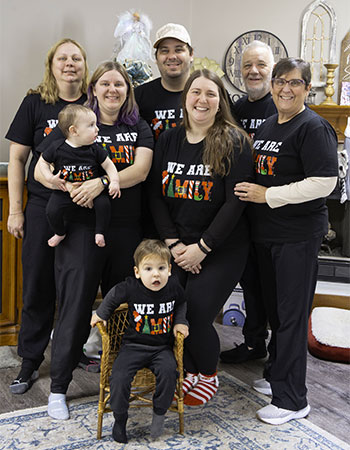
They are grandparents of Huxly and Hadee, who live only 15 minutes away from their home in Machesney Park, the same town where Suedbeck grew up. Her parents still reside in her nearby childhood home.
“Now is just the time to be able to not have the pressure of working and being able to enjoy life. My husband and I love to travel, and even though my schedule is somewhat flexible we want to be able to go out of the country for a couple weeks,” Suedbeck says.
“I have grandbabies now, so being with my grandkids is the next thing. I’m also a photographer, and I want to have more time to be able to be creative with my craft. Also, my mom is aging,” she adds.
“So, I think it’s time that I don’t have the pressure and the emails, because I always want to be very responsive to my students, and the grading and the planning and all of that stuff. I tend to be a little over-the-top on things, and that part of personality I would like to let go a little bit.”
