

When Mary Gardner graduated from Western Illinois University with her bachelor’s degree in Elementary Education, the market for teachers wasn’t nearly as exciting as she was excited to get a classroom.
“Enrollments were just starting to drop, and it was like schools weren’t aware that that was going to happen, so I did not get a job my first year. I subbed,” says Gardner, a native of Belvidere.
“Then, I never thought I was going to get tenure because I got RIF’d every year. ‘Reduction in Force’ came about, and so I got pink slips every year, and then I would get hired back for a different grade or a different school,” she adds. “Luckily, I got hired back almost all the time.”
Looking back now, a half-century later, Gardner considers the uncertainty a “good experience” that exposed her to a variety of grade levels – all but second, although she has provided pull-out instruction in reading to children that age.
By 1976, when she and her husband, Ewell, had settled in Mount Morris, Mrs. Gardner found part-time work teaching kindergarten in Chana, beginning what became a 35-year career in Oregon Community Unit School District 220.
And she loved every minute, including 18 years teaching first-grade, until her May 2012 retirement.
“Children are very honest. If they didn’t like your dress, or whatever, they told you,” she says with a laugh.
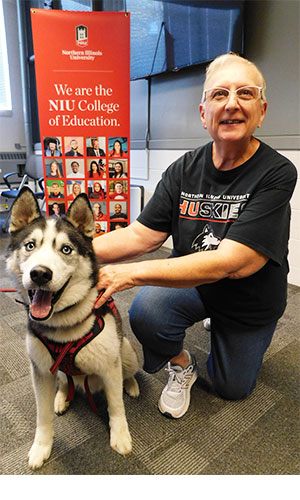 “Very early on,” she adds, “my mentor teacher told me that every student in this room is someone’s child whom they love, and so I learned to love them all, too. And they gave back tenfold whatever you did. They were curious. They wanted to learn. They loved to learn. They loved hands-on as much as could – and it’s hard to make reading hands-on, honestly, but we did whatever we could do. I just loved being with them.”
Gardner now is preparing for her second retirement, this time from the NIU College of Education’s Department of Curriculum and Instruction.
She joined the instructional faculty in 2002 after a phone call from Norm Stahl, who met her during her master’s studies: Gardner earned her M.S.Ed. in Literacy Education in 1997 and her Reading Specialist certification in 2004; Laurie Elish-Piper was among her professors.
“Norm contacted me in December of 2001, needing someone for the next semester in January,” Gardner says.
“He left a message on my home phone and said, ‘This is Norm Stahl from NIU. Please call me.’ I got home and listened to the message, and I told my husband, ‘I must still owe NIU money for my master’s.’ I couldn’t figure out why Norm would be calling me,” she adds. “But, for whatever reason, Laurie and Norm thought I could to this job.”
Right they were.
“I’ve learned so much from teaching teachers,” says Gardner, who felt a level of comfort in saying yes to Stahl because her own sons were about the same age as the undergraduates she would teach.
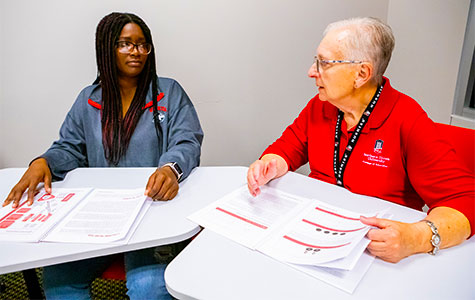
“And it’s hard work – it really is – making sure you understand what they need and making sure that they get what they need out of your course in a semester. It’s sort of like teaching reading to first-graders. It’s very important.”
Stahl dispatched Gardner throughout the region – Sterling, Rockford, Elgin, Crystal Lake, even DeKalb – to teach off-campus methods courses in reading instruction as well as occasional courses in language arts.
Years later, following her retirement from District 220, Gardner found another new home at NIU’s Jerry L. Johns Literacy Clinic.
“I love the literacy clinic. It’s my favorite place, and the program we’ve developed there for the Reading Endorsement program is exceptional,” Gardner says. “Our NIU students get a rewarding experience, and the kids they tutor get a great experience.”
The tutors, she says, grow from the hands-on interactions.
“We’re able to teach them in our courses about the diagnostic assessments that they need to learn how to use, and then we give them practice doing that with real-life children,” she says.
“So, after our NIU students have learned to do the assessments, we bring in children, and the children who are tutored are struggling readers – almost always,” she adds. “They assess the student, and then they have to do the hard part. They interpret those assessments, they figure out where the instruction needs to be and figure out what to do, and then we bring the kids back in, and they start tutoring.”
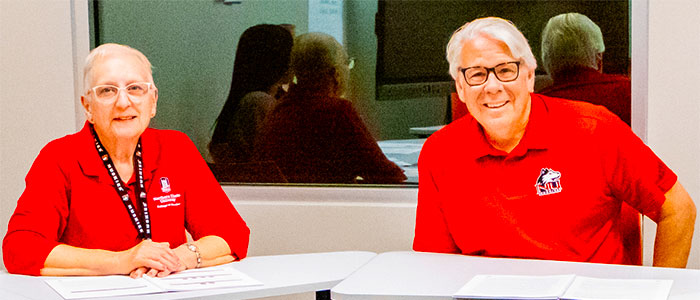
Learning continues during the tutoring process with not only interventions “tailored exactly to what the little people need” but also valuable realizations for future teachers.
“Every child who walks through your door into your classroom is a different bundle of why they can or can’t read. There’s not a one-size-fits-all magic answer for everybody,” Gardner says, “but these diagnostic assessments help our NIU students confidently figure out where there’s a need, and then we teach them what to do about it and how to do the instruction.”
Over the span of three courses, she adds, “we help guide them so that they’re confident and capable in doing their tutoring – and then they see growth, and that’s what teachers live for: that lightbulb moment.”
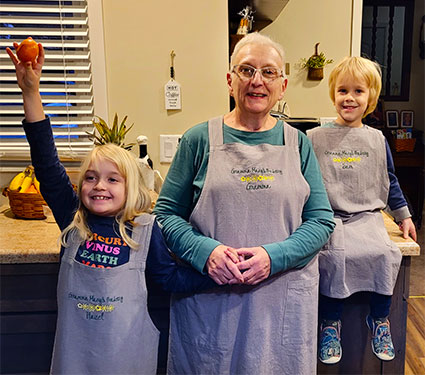
With a four-days-a-week schedule of hourlong sessions each June, “the intensity of the program is also something that makes it successful. We have really supportive families, because it’s a lot to get them four days a week in the summer.”
Then, Gardner says, “they come back in the fall, and last fall, the tutors said, ‘Well, it’s not as easy to see growth now because we’re only seeing them once a week.’ It’s just fun to watch our NIU students grow, and the young people, too.”
Meanwhile, she is grateful for her opportunity to collaborate with David Paige, the director of the literacy clinic.
“He’s a reading researcher, and I was never involved in research before,” she says.
“I’ve gotten a chance to help assess kids with him, and then he does his magic with all the numbers and interprets them, and then we go from there to, ‘What’s not working? And now what?’ ” she adds. “His reading-research brain is very different from my teacher brain – and I’m not going to say that I’m a reading researcher, but I’ve learned now that I can interpret a little bit. I’ve enjoyed that learning part, and I think the teaching part that I contributed to his knowledge was a good combination.”
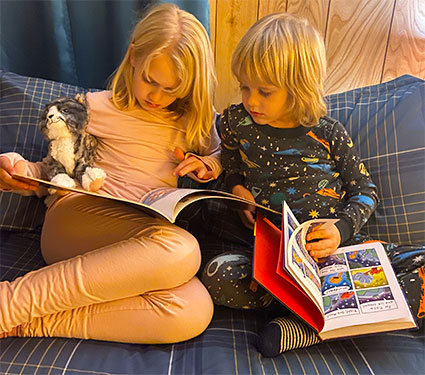
Gardner also appreciates the camaraderie of Dianne Zalesky, her officemate and frequent companion throughout Graham and Gabel halls.
“I wouldn’t have survived without her; that’s for sure,” Gardner says.
“We started about the same time, and very early on she noticed that I was an instructor and didn’t have an office, so she invited me to share a shelf or whatever I needed. She was already with another person, so it was generous of her to offer that,” she adds. “We teach different things, but she’s been a very good friend, and we vent when we need to sometimes.”
And, as this chapter closes, so will yet another.
Since 2004, Gardner has written a monthly newspaper column called “Reading Matters” that appears in the Oregon Republican Reporter.
“When I took my master’s classes, and I don’t remember the name of the textbook, but it was in Laurie Elish-Piper’s class, and toward the end of the book, it talked about, ‘If you are a literacy person, you have a responsibility to advocate for literacy in your community,’ ” she says.
“I live in Mount Morris, a very small town, and I thought, ‘We see all these things in the news that are negative about reading. Why don’t I do something different?’ ” she adds. “I went to the editor of the paper at the time, and I had a mock column that I suggested for the beginning, and suggested topics, and they latched onto it right away. She thought it was a great idea, and I’ve been doing that since.”
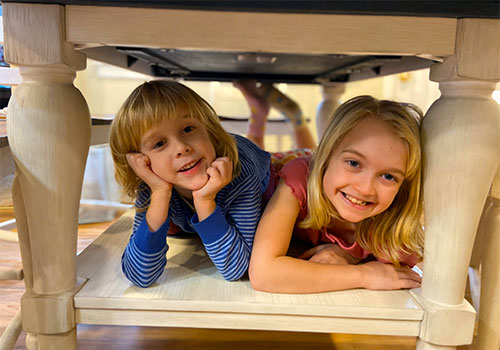 Gardner considers her audience as parents, grandparents and other caregivers, and has heard from some readers that they’ve clipped out her pieces and mailed them to their adult children who have little ones at home.
Beyond that, she says, “I don’t get much feedback, which is fine, so it’s just been sort of a labor of love.”
Retirement will give Gardner, a grandmother herself, the gift of time and travel.
“I want to see my grandchildren more. They live in Bloomington, Indiana, so I don’t get to see them as much as I’d like,” she says. “I also feel like I might be doing some writing, or making art, or just talking classes, like little crafting classes. Just kind of low key, and I get to choose. That’s the main thing.”
