
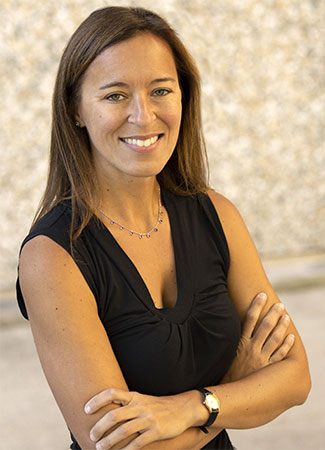
During her early days at NIU as a rookie assistant professor, Jenn Jacobs was already dreaming of the sabbatical she would take someday.
Not the destination or the purpose, of course, but just the concept.
“As far as I knew, it was just that you get to go travel someplace cool and still have your job,” says Jacobs, the Dr. M. Nadine Zimmerman Endowed Professor in the NIU Department of Kinesiology and Physical Education (KNPE), “but I did a lot of research into ‘What is a sabbatical?’ and saw that its roots are actually in the idea that academics have parameters that they’re trying to discover or research.”
One decade later, Jacobs realized that she had more than earned the academic freedom to pursue her scholarly passions – to stretch her limits, and maybe even with controversial topics – without the pressure of the tenure track.
So she began to think. Where to go? What to do?
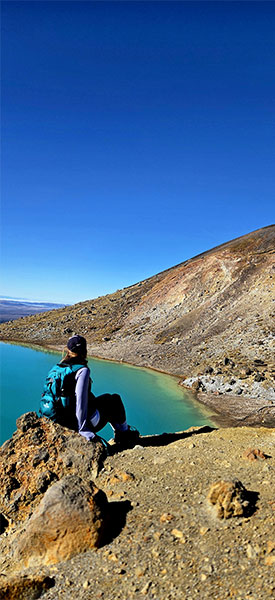
“I settled on New Zealand because ‘check’ on being one of the most unique places to travel on earth. It’s absolutely gorgeous and has natural beauty every which way,” she says. “You can surf, find a waterfall at every turn, live your days by sunrises and sunsets, pick and eat fresh fruit off trees, hike volcanoes, watch the ‘haka’ be performed by local people – what’s not to love?”
“I had been there a couple years ago for just a quick week,” she adds, “and I came across this pretty profound youth development center that had this focus of using sport for social change. I thought it was so fascinating how they integrated culture into their practice. So I said to myself the one sentence I’ve only said once before, about Belize – ‘I have to come back here and work.’”
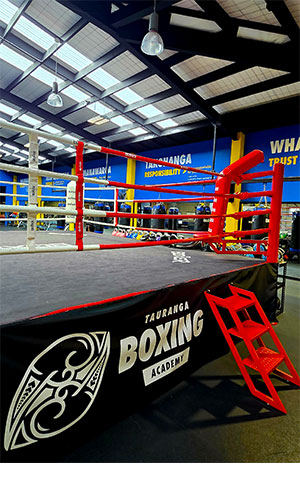 Practice of the Teaching Personal and Social Responsibility model through sport, which grounds the Project FLEX initiative Jacobs created with KNPE colleague Zach Wahl-Alexander, already was enough to make Tauranga’s Bay of Plenty Youth Development Trust perfect for closer study.
Meanwhile, the sport of boxing is king in New Zealand – and Jacobs long has mentored young girls in boxing through after-school programs.
Yet to also learn more about, and immerse herself in, the unique cultural aspects of the island country?
Jacobs knew she had to go – and so she did, spending the first part of the spring semester in New Zealand and Australia, observing at the youth center while also detouring to the University of Melbourne to collaborate with colleague David Gallant and talk to the School of Social Work’s faculty about Project FLEX.
What made the New Zealand opportunity even more appealing was the country’s social difference from the United States.
“Unlike here in the States, where we have tons of cultures, and most people just practice their own culture, New Zealand has two cultures: the indigenous people, who are called Māori people, and the Pākehā people, or the European people – the white people, essentially,” she says.
“But the country as a whole has adopted the Māori culture, which is really rooted in spirituality, humility and stewardship of the land,” she adds. “I just thought it was so impactful how a country can be on board and totally celebratory of something that not everybody belongs to, so I wanted to study it through the sport of boxing, which is a prominent sport over there.”
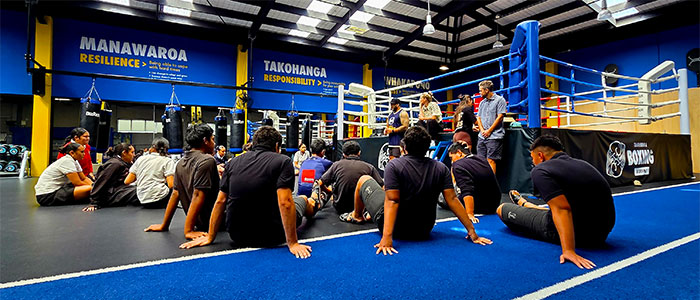
HER WEEKS AT THE government-funded Bay of Plenty, which supports youth and young adults from ages 10 to 25 and also serves as a gathering space for families to exercise, attend classes or even prepare food, took her in unexpected directions.
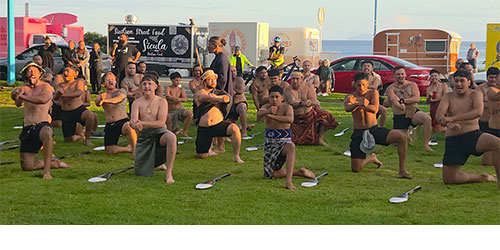 Some of those revelations, she says, “completely challenged how I do things at FLEX and made me think differently.”
“I had the privilege of just hanging out and watching. They have vocational programs, cultural programs helping people get in touch with their cultural roots and more sport-focused programs like boxing, fitness and outdoor education, doing really experiential thing in nature like orienteering, boating and hiking,” Jacobs says.
“For my research I kept a pretty robust journal. I interviewed coaches. I interviewed kids. I did structured observations. I didn’t really know what I was going to find, so I kept it open-ended. I essentially got this highly concentrated glimpse of how culture interacts,” she adds.
“I’m jazzed up that I got to experience how a culture can be a influential tool to help build life skills for kids, and that translates well to my world in FLEX because FLEX has a lot of different cultures. It has a prison culture. It has an urban culture. It has African American culture.”
New Zealand’s influence: show versus tell.
“In FLEX, we’re explicit about teaching life skills. Say that a session’s life skill focus is leadership. We will prompt the kids – ‘let’s define what that means. Let’s define what that looks like. Let’s define that that doesn’t look like.’ We have this intentional discussion around it, we integrate it into the sport and then, at the end, we talk about applying it outside the gym setting,” Jacobs says.
“What I would see happen with the folks in New Zealand is that they embody it rather than having to say it,” she adds. “They model it. They demonstrate it all the time. They’re not talking at the youth, saying, ‘This is what you have to do’ or ‘This is what you have to learn.’ ”
At first, she admits, “I was almost critical of that and like, ‘Wow, you guys have missed opportunities to capture teachable moments.’ ”
However, “I realized that because of their culture – it’s a collectivist culture, very tranquil and humble – that they’re less in your face and ‘put it on display’ and more about, ‘Let’s live it. Let’s experience it. Let’s feel it together.’ ”
Youth respond positively: “The feedback I got from the kids, is that they love being able to watch their coaches and look up to them and just ‘feel’ the learning instead of being told it like they are told in school ,” Jacobs says.
“So, I really want to try that with our kids in FLEX, especially given that they’re pretty much told what to do all day-every day being in prison,” she adds. “I think it could be a really subtle but intentional enhancement.”
Craig Nees, chairman of the Bay of Plenty Youth Development Trust, says his team “fully engaged with Jenn at all levels and enjoyed every minute. She was a delight to have with us.”
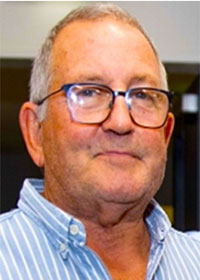
“Having someone of Jenn’s background and experience, who is working with at-risk youth in a different cultural environment, generated some good insights and comparisons. The diverse backgrounds we operate in increases the potential to learn and discuss outcomes and observations,” Nees says.
“I’m positive the benefits of Jenn’s time with us will be just the start of something very impactful and worthwhile,” he adds. “We have discussed the possibility of a joint research project collaborating with Northern Illinois University and Waikato University here in New Zealand. We have a meeting with Waikato University next week to start things off.”
NEXT ON THE AGENDA is writing a manuscript.
“I have over 80 pages of journaling, and that even doesn’t include the rest of my data,” Jacobs says. “I am fortunate that I picked a method that was really self-reflective for me personally because I’m going to have a cool narrative of all the experiences on this trip but it’s also going to be used in research.”
Other forthcoming work will include “an ongoing collaboration” with the Bay of Plenty Youth Development Trust and maybe bringing a graduate assistant from New Zealand to the NIU College of Education to earn a master’s degree while working with FLEX.
Jacobs is also hoping to capitalize on her trip to create an Engage Global program similar to Alternative Spring BAE.
“What was so impactful for me was the feeling of a small dose of living in another culture, and two months is a good enough time to sort of get entrenched in it. I got to feel what it feels like to be in a collectivist culture, which you can’t really understand until you’re taken away from our individualist culture,” she says.
 “It’s made me think differently about all the things I teach in the classroom – the theories, the teaching practices and even some of the social issues that I teach about,” she adds.
Previous lessons have “always been with an American lens of an individualistic culture where we sort of have these blinders up about the rest of the world, and so I’m really curious to see how that’s going to impact how I communicate sport psychology and sport sociology to my students – with more of a worldly lens and assumption that we are not always telling the whole story here in the U.S.”
“I want to find ways to challenge them to feel what it feels like to live somewhere else,” she says. “I wish I could pick them all up and drop them in New Zealand, but instead I’m trying to think of creative experiments where they can go to talk to people from other countries and, especially, from collectivist cultures.”
Doing so is enriching, says Jacobs, who journeyed to New Zealand eager to learn and with a willingness to share and offer her thoughts if asked for them.
“The people there were extremely welcoming, extremely receptive and extremely warm,” she says.
“When Māori people invite someone to their home, they believe them to be, and treat them as, a family member. They hug them and kiss them and prepare food for them and lay out the king-and-queen treatment for guests,” she adds. “I think that’s really rippled into their culture across the board where people met me with open arms.”
