
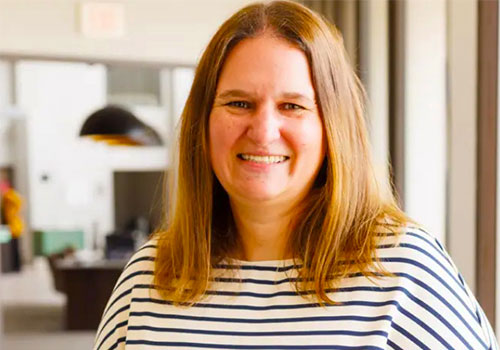
Cynthia Kilmer, a double-alumna of the NIU College of Education, has been named a 2025-26 Teach Plus Illinois Early Childhood Educator Policy Fellow.
According to the Teach Plus website, the program selects outstanding teachers to “develop their leadership abilities and learn to shape education policy by building their storytelling skills for impact, understanding the role of advocacy and learning how policy is created in order to improve opportunities and outcomes for students.”
Fellows lift “their voices by writing op-eds to deepen the public’s understanding of issues that matter to students and communities, share policy recommendations through testimony and meetings with policymakers and lead advocacy campaigns – ultimately working to create meaningful change for student success at the school, district, state and federal levels.”
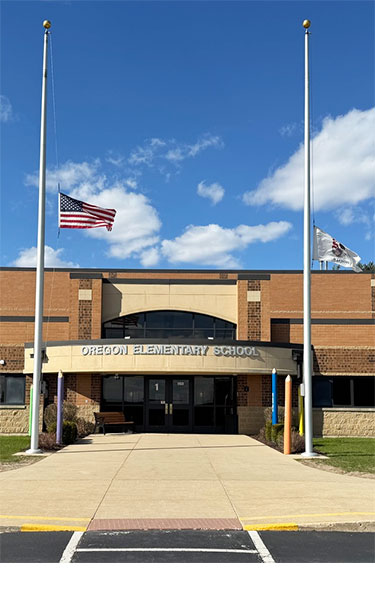
Kilmer, who teaches kindergarten at Oregon Elementary School, will serve on a Teach Plus action group investigating the issue of job fatigue among early childhood educators.
Her committee’s work comes in advance of the July 1 launch of the new Illinois Department of Early Childhood that, according to the state, will “will bring early childhood services together in one place, making it easier for families and providers to access services and improving how
different programs work together.”
 “We are working with them to help collect data from teachers around the state about what is really making them burn out,” says Kilmer, who expects that she and her colleagues will deliver a qualitative report on their findings.
“Besides pay, are there rules and policies in place that are making it hard for them to come in and do their job every day or want to stay at their job?” she adds. “Once you tell a bunch of teachers that you want to hear their opinion about this – on why they’re burned out – they’re going to be willing to share with you.”
Graduating from NIU in 2005 with her bachelor’s degree in Elementary Education and in 2017 with her master’s in Educational Psychology, Kilmer was honored when she learned that her Teach Plus application received the organization’s approval.
“I was excited,” she says. “I felt like, ‘You know, this is my sign that it’s time for me to do something a little bit different and a little bit out-of-the-box, and even to spread awareness about what this fellowship does.”
She discovered Teach Plus a few years ago and submitted a written application.
 Next steps in the selection process include a one-on-one interview and then a small-group activity where three or four hopefuls are given a mock advocacy scenario and asked to hatch a strategic action plan within just one hour.
Placed on the wait list that first time, Kilmer was invited to apply again – and although her schedule wouldn’t allow that the next year, she was ready this year and is eager to serve.
“One of the biggest complaints you’ll get from educators is that educators don’t run education,” Kilmer says. “There are people in the state who run education who have never taught. There are people nationwide who are making choices for us who aren’t teachers or educators.”
For example, some policymakers believe that kindergartners shouldn’t play at school – and, she says, those people clearly aren’t talking to kindergarten teachers about their students: “They don’t want to sit and stare at a screen or listen to you lecture all day,” she says.
“It’s those kinds of things that I know are not right,” says the champion of play-based learning.
“They talk about test scores and how we’re behind, or how kids have all these behaviors, and I’m like, ‘Well, we’re not changing the policies, like having play in the classroom or having more recess,’ or stopping all the state testing in kindergarten,” she adds. “It’s those kinds of issues that I think would be beneficial for all of our littles moving forward, but who’s going to do it? Teach Plus is there for that.”
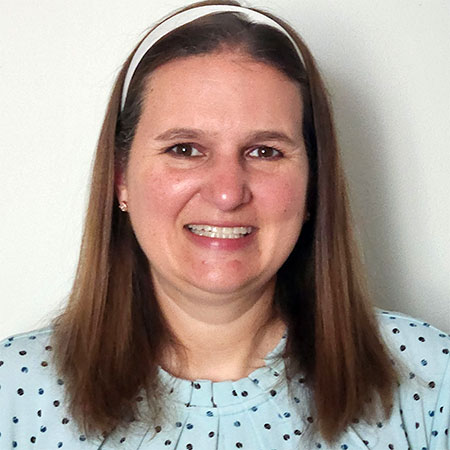
A NATIVE OF BATAVIA, Kilmer always wanted to teach.
“School was a happy place for me,” she says. “I don’t know if it’s because I fell in love with my kindergarten teacher and thought that she was amazing, but I do remember all of my school experiences from early childhood on, and they’ve always been so positive.”
Her only college application was mailed to NIU, where her freshman year began in the fall of 2001.
“I knew it was the place to go if you wanted to be a teacher in our area,” she says. “I’d always heard great things, and I knew that the history of NIU was a college for teachers.”
Following the completion of her gen eds, Kilmer enjoyed her methods courses and “putting theory and practice together.”
Those classes not only provided a strong foundation, she says, but also “left room for being innovative – like, ‘We know that this might be the goal, but let us decide how we’re going to get there.’ They taught me what I needed to know to get started, but they didn’t teach me how to do every little thing, and then I was able to become my own person – my own teacher.”
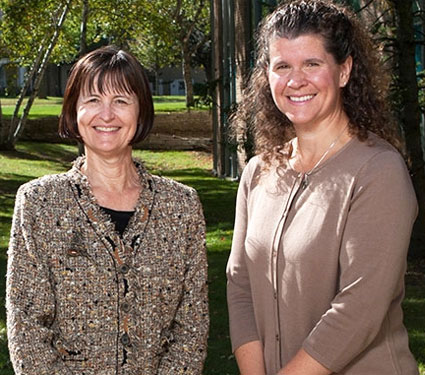
An undergraduate course in educational psychology taught by former College of Education faculty member Jennifer Schmidt fascinated her.
“I just fell in love with it, and I thought it was so amazing, like, ‘How are we not taking more classes like this? If we aren’t understanding how the brain works with children and education, then what are we doing?’ ” Kilmer says.
“That became a passion of mine,” she adds, “especially working with early childhood in child care centers, where it’s not as academically focused and you can focus on what their brain is doing, how they are utilizing it at certain points in their life, what’s developmentally appropriate for a 4-year-old versus a 5-year-old versus a 6-year-old and how we put that into practice in the classroom.”
Such questions brought her back to NIU for the M.S.Ed., reuniting her with Schimdt. She also enjoyed classes taught by retired Department of Leadership, Educational Psychology and Foundations Professor Lee Shumow and the thesis advising she received from Stephen Tonks.
“It was such a cool, close-knit community,” Kilmer says, “and I feel like it’s given me an edge in understanding how kids work, how their brains work when it comes to teaching and learning and what’s appropriate for the classroom and at what ages.”
Despite her master’s, and her interest in having a say in how educational policy is shaped and implemented, she has no plans to leave the classroom.
Her résumé lists positions in infant/toddler care, teaching preschool and second-grade and administration of early childhood programs, but kindergarten is her favorite.
“The growth that happens in kindergarten is so exciting,” Kilmer says. “They come in with hardly any skills, and when they walk out, they’re reading, they’re writing, they’re doing math – and they’ve also learned how to be a good friend. They’ve learned how to be part of their community – their school community – and to be a better person than when they walked in.”
Light bulb moments warm her heart, she says, offering “consonant-vowel-consonant” words as an example.
Only a couple months into the school year, the children have already learned about a dozen letter sounds and are able to orally spell words such as “cat.” Kilmer pronounces the /c/ /a/ /t/ prompts for them, and they respond with “c,” “a” and “t.”
“This early on, they’re like, ‘Whoa, we’re doing big things,’ ” she says, “and just because they’re little doesn’t mean they can’t do the big things.”
