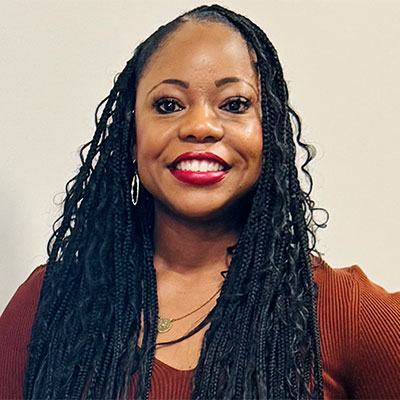
Taren Turner frames her obligation as an educator in terms of “ensuring responsiveness and innovation.”
And the director of Alternative Education Programming for the Rockford Public Schools has discovered ways to do just that in the RISE (Rockford Inspiring School and Community Excellence) initiative.
She also has compelling evidence that supports her beliefs – and from an unexpected source.
“We have a responsibility in the public education system, to meet the needs of all learners – yet, historically, practices and policies have been steeped in traditional norms,” says Turner, a three-time alumna of the NIU College of Education. “Meeting the needs of all learners, particularly those from marginalized populations, cannot be attained merely through the status quo.”
Fortunately, she adds, “as jarring as it was initially, the COVID-19 pandemic proved to the educational realm that we can flip tradition and respond when forced.”
“I want to take the good out of what we learned about that experience and have it live in present and future classrooms,” Turner says. “Many of the practices that came out of ‘doing school during a global pandemic’ naturally addressed various student needs, such as flexible scheduling, online learning, cultural responsiveness and teaching environments that promoted the social/emotional well-being of students and a prioritized sense of belonging.”
RISE, funded through a grant from the nonprofit Grow Your Own Illinois (GYO) that supports the development of teacher pathways in communities across Illinois, is expanding the pool of transformative ideas.
 Chief among those is a revolutionary notion: engaging and collaborating with community experts to create a curriculum and coursework for teacher preparation that is not only local in nature but also steeped in social justice for a city as diverse as Rockford.
Partners in addition to GYO, NIU and the Rockford Public Schools are Rock Valley College, YMCA of Rock River Valley and Wabongo Leadership Council.
Members of the initiative’s coordinating team conducted listening sessions and focus groups with stakeholders, including parents, to uncover the needs and priorities: belonging, social-emotional learning and restorative justice.
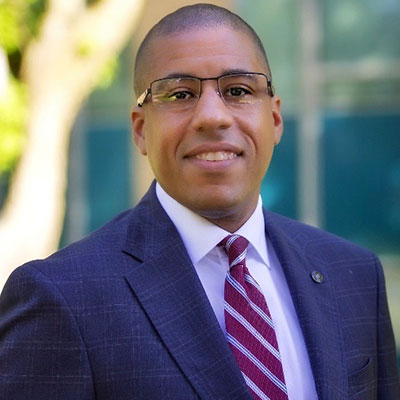
“This project started with the goal of centering the voices of marginalized students, parents and community members,” says Eric Junco, the NIU College of Education’s director for Equity and the faculty lead on RISE.
“From these conversations, we built advisory and curriculum committees with educators, administrators and leaders from three activist organizations,” he adds. “These committees became essential bridges to build trust and understanding between Rockford schools and the communities they serve. Our preservice teachers are reporting increased confidence in creating inclusive spaces and bridging their teaching to Rockford’s culture and community.”
Coming with that added confidence?
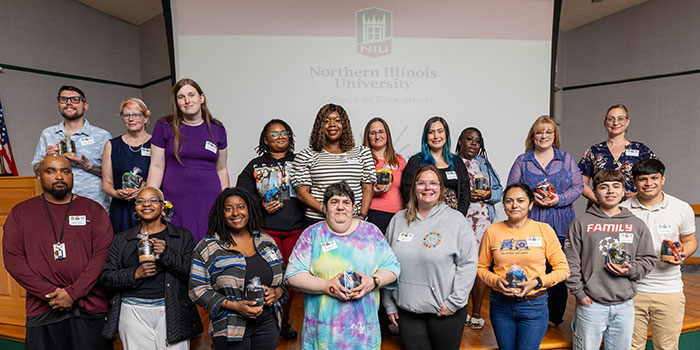
More than two dozen future educators who have committed to teaching in the Rockford Public Schools for five years after their May 2026 graduation – and who currently are working in support roles for the district as they pursue their employer-paid bachelor’s degrees in Elementary Education from the NIU Department of Curriculum and Instruction.
Lessening “financial, social and emotional burdens of teacher preparation” is key to ensuring successful completion of the program and transition to full-time classroom positions, says Sally Blake, chair of the department.
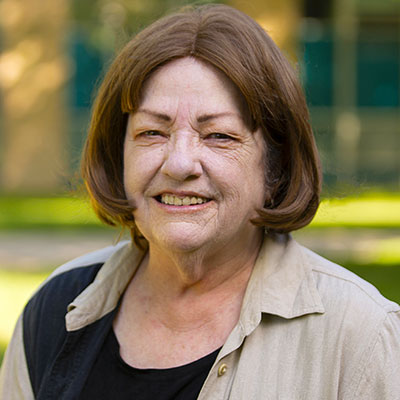
“There is a significant demographic divide in the teacher workforce. Students from marginalized identifies don’t have many opportunities to see their identities reflected in teachers, and we’re working to do something about that,” Blake says.
“We’re hoping to build a critical mass of Black, Latino and other candidates of color,” she adds. “We also want to ground teacher preparation in the diverse communities in which Black, Latino and other candidates of color live.”
Maureen Kirschmann, director of Attendance and Community Engagement for District 205, shares that philosophy and its outcomes.
She cites a model created by educator Steve Constantino, whose research “demonstrates how to move beyond transactional involvement to genuine engagement.”
“Community engagement is a foundational pillar in all models of successful family engagement,” Kirschmann says.
“We have to create a culture of inclusivity by building trust through effective communication and equipping families with the resources they need to be successful,” she adds. “The model also emphasizes the importance of bringing stakeholders – students, families and the broader community – to the table as real partners so they can actively participate in the decision-making process. True engagement is a partnership done with stakeholders, not for them.”
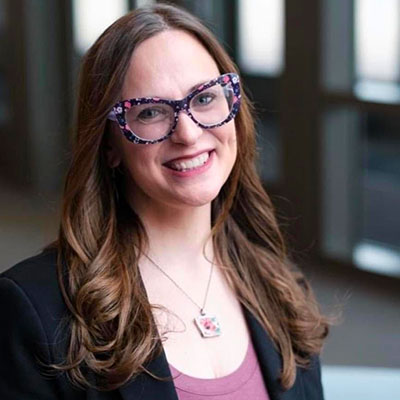
RISE is designed to accomplish that, she says.
Graduates will prove integral “in cultivating school communities where families know that their voices matter and that their contributions are vital to student and school success,” she adds, and “know to prioritize building trusting relationships, ensuring that every family feels valued, heard and included in the educational process.”
Doing so is “essential to strengthening the social fabric of our city as a whole, positioning schools as not just places of learning but also as hubs of trust, collaboration and shared growth.”
“RISE students were challenged to rethink their understanding of engagement, as it is often mistaken for, and used interchangeably with, involvement – even though the two are very different: The process of meaningful and effective engagement is rooted in beliefs, values and attitudes,” Kirschmann says.
“With a strong, positive culture in place, we can create strategies that further equip families for success and that support invisible engagement – recognizing and appreciating contributions that might not always be visible.”
Megan Larson, grant specialist with YMCA of Rock River Valley, has provided some of that town-gown relationship.
Larson met the RISE students to deliver a guest presentation on designing school field trips that are culturally responsive and aligned to classroom pedagogy.
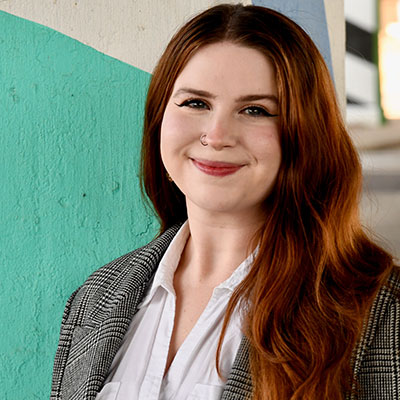
Her talk emphasized the critical role of funding and community support “in creating educational experiences that are both enriching and relevant to students’ lives” and that connecting curriculum to the cultural backgrounds and personal experiences of students “validates identities” and “inspires greater engagement and academic success.”
“Learning is a mutualistic process where students, teachers and community organizations all benefit,” Larson says.
“When educators build strong partnerships with local businesses, nonprofits and community leaders, they unlock access to valuable resources, expertise and real-world experiences,” she adds. “These partnerships can also be instrumental in creating culturally responsive learning environments, especially for marginalized students. Educators can create a more impactful and inclusive learning environment where students see the value of education reflected in their community.”
Turner, who holds an Ed.D. in Educational Leadership and Policy Studies (’23), an Ed.S. in Educational Administration (’21) and an M.S.Ed. in Educational Administration (’14), is on it.
Her goal is to infuse concepts of root-cause analysis, philosophy, theory and application of research-based best practices throughout the preparation program so that teachers will know “the ‘why’ behind the sense of urgency to respond to each student’s needs and abilities.”
“I plan to help future educators meet diverse student needs through the emphasis of creating asset-based and advocacy-driven learning environments,” Turner says. “When we are serious about deepening student understanding through inquiry, we respect them enough to value their viewpoints and embrace their identity within classroom conversations and practices.”
Eric Junco contributed to the writing of this report.