

Mixed-methods research constitutes 12% of all published articles in the top 10 educational technology journals, according to a trio of researchers affiliated with the College of Education.
Olha Ketsman, assistant professor in the Department of Educational Technology, Research and Assessment (ETRA), collaborated with Alissa Droog, assistant professor and Education and Social Sciences librarian at NIU, and ETRA doctoral student Sumaiya Qazi, a graduate research assistant.
Ketsman, Droog and Qazi looked at 2,380 articles published in five years’ worth of the educational technology field’s 10 leading journals to highlight mixed-methods approaches in the field.
Their work was published in the March 2025 issue of Computers & Education and will be presented next month at the 2025 American Educational Research Association Conference in Denver.
“As a researcher and a faculty member teaching a mixed methods research graduate course (ETR 535) in ETRA department, I don’t often see many robust mixed methods studies published in edtech journals,” Ketsman said.
“And that presents a problem,” she said, “because a lot of the research problems that educational technology researchers study are multidimensional and can benefit from mixed methods approaches.
By shining this type of light on mixed methods research in ed tech, the trio hope to encourage other researchers to adopt mixed methods approaches where applicable and improve training for future researchers in the method which will elevate the rigor and impact of their work.
 “Editors, reviewers and publishers in educational technology journals can benefit from the findings by adopting editorial policies that encourage publication of mixed-methods research,” she added. “Educational technology journals could then publish editorials on the design and implementation of mixed methods.”
Qazi, who helped to examine the articles and code the data, and Droog, who joined the project to devise a method to determine top publications via prevalence scores, have additional recommendations.
Examination of more than 2,000 abstracts uncovered a crucial detail often missing, they said.
“It was interesting to see that a lot of abstracts don’t mention the particular type of research design for the study,” Qazi said. “To code the article, we would examine the full text of the articles – reading through the procedure, data and other sections – to determine what research approach was applied: quantitative, qualitative or mixed methods, so I would say having clear guidelines for what an abstract should look like in a journal is one important takeaway, amongst others.”
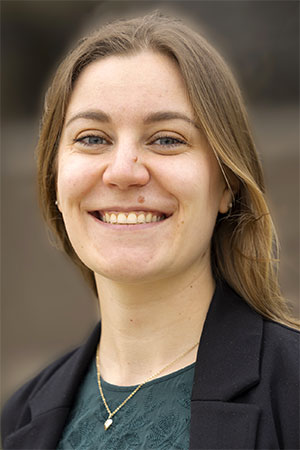
Droog, who encourages journals to set and maintain what they require in abstracts, is also taking a proactive position.
“It’s changing my teaching a little bit and impacting my daily practice,” she said. “After working on this project, I started preparing a workshop with the Writing Center on how to write an abstract correctly.”
She appreciates Ketsman’s invitation to join the research.
“The piece that I think I was able to provide as a librarian was, ‘How do we do this research in a way that is transparent and predictable?’ How do we get 2,000-plus articles downloaded in order to be analyzed: How do we do this in a way that is defendable to an audience at an academic level – and actually improve upon what people were doing before?” Droog said.
“I’ve been doing a lot of training in systematic review and evidence synthesis,” she added, “and for this project, we were able to borrow methods from that type of research to increase the quality of the research being done here.”
For Qazi, who previously taught in the Chicago Public Schools, participation in the work, along with the published article and the upcoming conference presentation, is adding substantial value to her doctoral program.
 “I’m really passionate about educational technology,” said Qazi, who holds a master’s in that discipline as well as a K-12 technology specialist endorsement, “and I wanted to further that education and by getting my doctorate in the same field. I chose NIU because it offers a Ph.D. program in the field, which would allow me to learn and do more rigorous research work in a higher education setting.”
“I’m really glad I have a K-12 background where I’m able to bring my own classroom experience, knowledge and ‘teacher point of view’ to the work I do. I love teaching – I miss teaching – but fortunately, as a graduate TA, I still get to teach an undergraduate class and gain hands-on experience of teaching college students,” Qazi said.
“My long-term goals would be to either continue working in higher ed, or work as a researcher in an edtech company” she added. “The options are varied, so I’m not sure exactly where I’ll land, but I’m passionate about the field, so I know I’ll be happy.”
