

Although Tommy Jonen is in the early stages of his journey to becoming a teacher, the junior Special Education major is familiar with the workplace.
Education, he says, “requires collaboration and consistent development among all members.”
The purpose of that teamwork is better student outcomes through “opportunities for structure to analyzing assessment data to improve teaching strategies, identifying struggling students to provide support and building professional relationships and teacher confidence.”
But, he knows, “differences in implementation, priorities and surrounding factors” can hamper those efforts.
“I have been in schools. I have previous experience. I was a teacher’s aide and paraprofessional,” Jonen says. “I have experienced some professional learning communities, and during my clinicals in this program, I’ve seen how they do them differently.”
Jonen had questions: What are the characteristics of effective professional learning communities? What makes staff meetings productive?
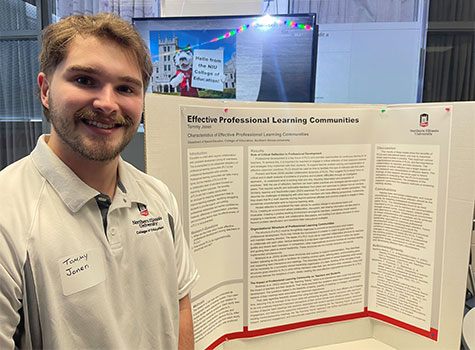
His research – a literature review of four peer-reviewed studies, including resources from outside the United States – examined the traits that cultivate effective professional development among teachers and the organization and leadership of professional learning communities.
“Overall, I learned that building mutual trust, having honest communication and agreeing on shared norms for operating are paramount to having actual professional development,” Jonen says. “Fostering the ability to become your own leader within this professional development is also huge.”
Professional learning communities also thrive on, and transform instructional practices, through critical reflection, identifying challenges, constructive discussion, an affirmative culture and sharing good ideas.
Understanding in advance what constitutes best practices in professional learning communities will elevate his eventual work in schools, he says, and then in classrooms.
“This knowledge will really benefit me when it comes to my engagement in those environments, whether it is specifically a PLC or any educational team,” he says.
“Being aware of this will help me build relationships that are needed and will also help me foster those environments where open and honest communication can take place for real, substantial growth, and ultimately make a positive impact on the field of education and special education in particular.”
