

Ariella Cole hasn’t started teaching yet.
Cole is among the 20 paraeducators currently pursuing NIU bachelor’s degrees in Elementary Education through the RISE (Rockford Inspiring School and Community Excellence) initiative.
But she’s a behavioral intervention specialist who already works in District 205 schools. She sees what walks through the doors every morning. She is acutely aware of what can compete with learning.
“Our kids are faced with a lot. We have a lot of students – even at the elementary level, even as young as kindergarten – who come in and who have experienced death in the family, death of parents, police activity at home,” Cole says.
“We have the trauma of abuse, whether it be physical, sexual, mental or all of those. Food uncertainty. Homelessness,” she adds. “There’s not always a high value of education in some of the homes. Some are just trying to survive.”
RISE understands that as well.
Its students – Cole included – were invited to “A Celebration of Resilience,” Area 2 SEL Hub’s third annual Summer Symposium that served as a hands-on field lab for educators.
Preservice teachers in attendance, including four from the NIU program funded by a grant from the nonprofit Grow Your Own Illinois, were able to hear about and practice trauma-informed, restorative strategies that promote social and emotional learning, co-regulate students, and build productive, successful and thriving classroom communities.
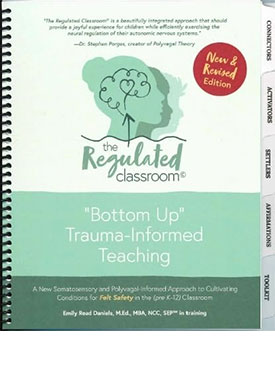
 Held June 12 at the Embassy Suites of Rockford, the day featured several guest speakers including Emily Read Daniels, author of “The Regulated Classroom,” and Amanda Mathews, a fifth-grade teacher at Whitman Post Elementary School in Rockton School District 140.
“The Summer Symposium introduced our GYO Rockford RISE students to a professional community that models the power of relational teaching, letting them see how the ideas we discuss from lectures show up in classrooms across local Illinois school districts,” says Eric Junco, the NIU College of Education’s director of Academic Cultivation and Engagement.
“Because every strategy centered belonging, culture, and well-being, our students left convinced that self-regulation and community are foundations of great teaching.”

Daniels told the audience at her breakout session about one of her foundations: “ ‘Felt safety’ precedes learning.”
“ ‘Felt safety’ is what happens when a student’s nervous system senses, ‘I’m OK here. I belong here. I’m safe enough to learn,’ ” says Daniels, whose book, “The Regulated Classroom,” will serve as a text for this fall’s “Cultures of Caring” course for the RISE cohort.
“In a second-grade classroom at 10 a.m., that might look like starting the day with 30 seconds to two minutes of a ‘Connector’ practice, something playful and relational to engage the social engagement system,” she adds. “Ten minutes later, the class might move into a brief ‘Activator,’ like collective rhythm-making, to bring energy and focus into the room.”
Other “micro-moments,” such as “Settler” and “Affirmation,” enable students to regulate, return to calm and, at the end of the day, reinforce connection and gratitude.
“These four core practices aren’t just ‘nice-to-haves,’ ” she says. “They are strategic, sensory-rich moments that buffer stress, support nervous system regulation and lay the groundwork for learning.”
Why micro-moments?
“The brain changes through small, repeated doses of safety and connection,” Daniels says.
 “Neuroplasticity – the brain’s ability to grow and adapt – is strengthened by consistent, repeated experiences. In fact, short, simple moments that happen often are more likely to create lasting neural pathways than long, occasional ones,” she adds.
“By keeping our practices to one to three minutes, we not only make them easy to integrate into the school day, but we also support the nervous systems in tolerating different states, such as excitement, movement or stillness, without tipping into a survival response, especially with students who’ve experienced trauma or chronic stress.”
She hopes teachers at the summer symposium, as well as parents and other stakeholders, understand that socioemotional regulation is integral to the process of covering the curriculum.
“Regulation isn’t extra. It’s the entry point. It creates the conditions for instruction to actually work. Content doesn’t land if no one’s available to receive it,” Daniels says. “Delivering curriculum is only effective when both the educator and students are in a regulated state: ready to teach, ready to learn.”
MATHEWS, WHO TITLED HER presentation “Resilient Roots,” defines resilience as “a student’s ability to persist, adapt and grow in the face of challenge, both in and out of the classroom.”
“In my experience, it’s not always loud or obvious. Sometimes it looks like a student showing up to school every day, even when things at home are unstable. Sometimes it’s a quiet voice answering a question they were afraid to get wrong,” Mathews says.

“Resilience shows up in small acts of courage, perseverance and hope,” she adds, “and when we create space for students to feel seen and valued, that resilience only grows stronger.”
Discovering what students bring to the classroom from their out-of-school lives can help.
“A student’s cultural identify is often the foundation of their resilience. Family stories, community values, language and traditions provide a sense of pride and strength that can carry them through adversity,” Mathews says.
“One simple way a teacher can affirm that identify is by integrating students’ backgrounds into the curriculum,” she says. “Invite students to share parts of their culture – through music, literature, personal narratives or even a classroom discussion starter like ‘What’s something that makes your family special?’ These moments validate identity and build belonging.”
Teachers should extend those inquires to families, she adds.
“We honor resilience when we approach families and communities as partners, not problems to fix,” she says. “It starts with listening. Ask about their hopes, strengths and the values they want their child to carry.”
Such curiosity about, and connection to, students is critical to “cultivating a classroom environment where students feel safe, known and celebrated.”
 “Blending culture, social-emotional learning and resilience isn’t a separate ‘lesson’ – it’s a mindset,” she says. “It’s about seeing students as whole people and honoring the layers of strength they already carry with them. Once that lens is in place, the practices will follow naturally.”
Mathews encourages teachers to learn how to pronounce every student’s name correctly, or to ask students to talk about what makes their family proud, or to lead students through shared reflection on personal strengths.
During instruction, meanwhile, teachers can create “space for student stories and identities in everyday learning.”
“If you’re reading a text in English language arts, ask, ‘Whose voice is missing? Whose story could we also tell?’ If you’re teaching a science concept, consider how different cultures have contributed to that field,” she says. “Small shifts in framing and discussion can make a powerful difference.”
GREAT STUFF, SAYS Chynar Amanova, a grant program assistant and tutor with the GYO-Rockford RISE program.
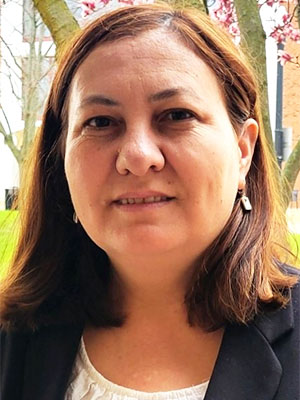
Amanova, whose myriad RISE responsibilities include providing academic and technology support to the preservice teachers, also attended the June 12 symposium.
“Resilience is such a critical theme, especially in education, as it plays a significant role in both student and teacher well-being,” Amanova says.
“One idea I found particularly impactful is the importance of creating a safe and supportive environment where students feel comfortable expressing their emotions and experiences. When students are encouraged to share their struggles, it fosters a sense of community and connection,” she adds.
“Another key takeaway is the idea of modeling resilience as educators. Sharing personal stories of overcoming obstacles can inspire students and help them understand that resilience is a skill that can be developed over time.”
For Cole, currently working at Rockford’s Welsh Elementary School, hearing such first-person accounts detailing emotional impediments to effective learning struck a nerve during the symposium.
Cole was touched by two tales of relationships between students and their teachers, families and communities that were plagued with negativity, whether in situations, words or both.
In each case, however, transformational interventions came from teachers who “cared about them and checked in with them and were there for them and really pushed them to take a bigger interest in their education and to feel confident that they could do more than they had done in the past – or that they had been told they could do in the past.”
 She also heard encouragement in the symposium’s recommended strategies “to push through adversity and to keep trying,” and not just those meant to empower students.
“There was talk of self-care and just being mindful, and I actually talked about this with someone else recently – of the secondhand trauma we sometimes experience just from dealing with the students and the things they’re going through, and helping them through,” Cole says.
“We have to take time and take care of ourselves,” she adds, “having moments where we can step back and kind of regroup in the midst of helping the kids at the same time.”
Eric Junco contributed to the writing of this report.
