
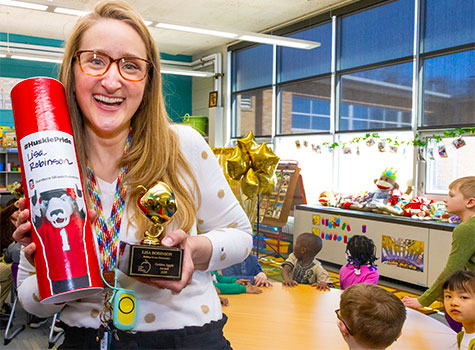
Lisa Robinson, kindergarten teacher at Rolling Green Elementary School, has been a Golden Apple finalist before.
And now Robinson, who earned a B.S.Ed. in Special Education: Deaf and Hard of Hearing in 2004, is a winner.
“Being recognized as a Top 20 finalist again is high praise. It feels like a healthy mix of excitement, validation and pressure, along with a renewed sense of purpose,” Robinson says. “I am humbled to be among such effective, experienced, engaging educators. This group of women are remarkable leaders, inside their classrooms and outside in their communities.”
Now in its 28th year, the mission of the Golden Apple Foundation is to inspire, celebrate and support excellence in education in the Rockford area.
For Robinson, teaching is about fostering relationships.
“Relationships with kids, of course. Staff. Families. I’ve been in education long enough now where I have had siblings and cousins of former students,” Robinson says. “Those relationships continue and are stronger and more reliable as time goes on and connections are made.”
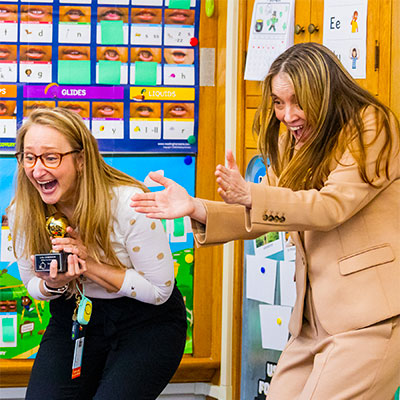
She considers social-emotional learning “vital,” a belief reinforced more than ever in 2023 – the last time she made the Top 20.
One of Robinson’s 2023 kindergartners lost her mother in September, only a week or so after school began.
“I’m a big advocate of having a classroom community, so we have morning meetings and we talk about feelings,” she says. “I feel strongly about it because I don’t feel like I was ever taught in school what emotions are, how to respond to them, what they feel like in our bodies and what they look like on human faces. We really dive into that.”
But Robinson felt great anxiety about when “Caroline” would return to school at the end of September.
“Thoughts ruminated about how I would react, how the rest of the children would react and what feelings in would bring up in our kindergarten classroom. We had built a pretty strong community while she was gone, and when she came back, her fists were balled, she was quiet and she didn’t want to participate in anything.”
Eventually, Robinson says, “Caroline opened up. She finally just said it, and I’m so thankful she did: ‘My mommy died, and I feel really sad about it.’ That opened the door to so much.”
Robinson’s students then “cried with her. We loved on her. Kids asked to get her Kleenexes and wanted to hug her. And we talked about it.”
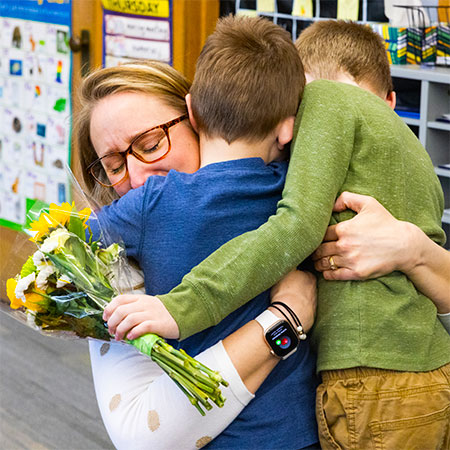
Two years later, Robinson continues to draw encouragement from Caroline’s story – and from finding herself again among the Golden Apple finalists.
“Teachers always want to do better, but when I see myself among these 19 other educators who I have looked up to, and who I consider to be amazing, it makes me want to be even more of what I already am,” she says. “I created positive memories with Golden Apple in 2023, and I’m honored to embark on the journey again in 2025.”
Yet her work has evolved in ways that Robinson, the mother of a kindergartner, has “witnessed this up close and personally.”
“In the past two years of teaching, I’ve recognized one notable shift: Toddlers who grew up during the pandemic may have significantly limited experience in public places, such as grocery stores,” she says. “Due to lockdowns and an increased reliance on online commerce, many toddlers faced reduced sensory stimulation, social interaction and exposure to different foods and environments that a typical grocery shopping trip provides.”
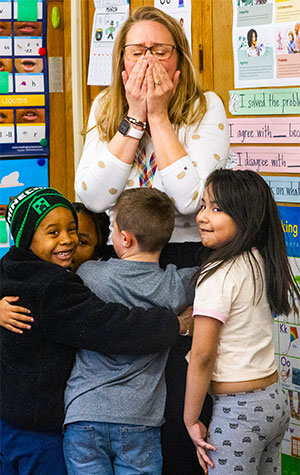
As a result, she says, “these factors have impacted early childhood development, sometimes leading to anxiety or fear of new sights, smells and textures.”
Her solution? A deep dive into the five senses, along with the source of food, that eases students into understanding what they’re missing.
Field trips to an apple orchard to pick and eat fresh produce. Monthly visits from the Winnebago-Boone Farm Bureau to deliver an Agriculture in the Classroom lesson with activities that teach students about the importance of seasons, farming and local agriculture.
“I hope to be a sturdy pilot for my kindergartners as we navigate new and uncomfortable situations together,” Robinson says. “The pandemic continues to affect us in ways we didn’t understand at the time, and I cherish being a part of the healing process for our youngest learners.”
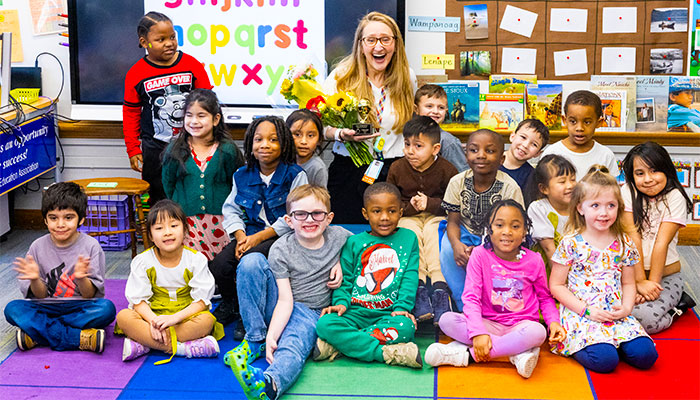
Joining Robinson in the Top 20 were three other teachers with NIU College of Education connections are among the Top 20 candidates for this spring’s Rockford-area Golden Apple awards.
And she was not the only one for whom the excitement was a familiar feeling.
 Lisa Wight, fifth-grade teacher at Durand Elementary School; and Kalli Bruck, an early childhood teacher at Caledonia Elementary School, also have been here before.
While neither was named a winner in their respective finalist years (2020 and 2012), both appreciated the new nominations – and were more than happy to undertake again the tasks required as part of the ultimate selection process.
“Golden Apple is really awesome – I love what they do; I love their mission – and it feels amazing to be part of this foundation that does great things and honors teachers,” says Wight, who completed her B.S.Ed. in Elementary Education in 2014.
“Being in the Top 20 the last time was really motivating for me to do it again, because I feel like, as a teacher, I’m patient and I listen to my students – but I also feel like I’m really reflective on my teaching,” she says.
“My principal wrote in her letter of recommendation that I am reflective in my continued efforts to be the best teacher I can possibly be. She stated that after many years of teaching, I continue to understand the value of best teaching practices,” she adds. “My principal really appreciates that I take what she has to say and improve on what I do every single year. For me, it’s ‘What can I do more effectively this year than last year?’ Growing as a teacher is important because I expect a lot out of my students, and I feel like I should expect even more out of myself.”
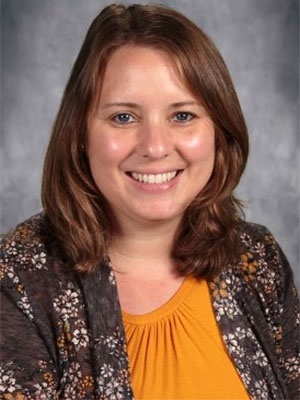
Bruck holds a certificate of graduate study in Teaching English as a Second Language and Bilingual Education.
“I pursued a certificate in Teaching English as a Second Language in 2014 when I noticed a change in my student demographics,” says Bruck, an early childhood educator since 2004 who joined the Caledonia staff two years ago. “I had an increase of students coming from different countries and cultural backgrounds. I wanted to learn the best practices for helping these students learn English while still honoring their home language. My ESL certificate has proven to be very valuable as my student population continues to change.”
Belinda Roberts, B.S.Ed. Elementary Education, ’96, who teaches bilingual early childhood classes at Washington Academy in Belvidere Community Unit School District 100, isn’t sure how to explain her “why” for becoming a teacher.
“That’s a question I’ve been asked on and off throughout my career, and the short answer is, ‘I don’t know. It’s just what I was supposed to be.’ I know that’s not a good answer, but I just can’t imagine myself doing anything else,” says Roberts, a Poplar Grove native.
“I really love being around kids. I love their curiosity, their kindness and their willingness to try new things: They want to learn,” she adds. “I get to laugh every day. At how many jobs do you get to laugh every day?”
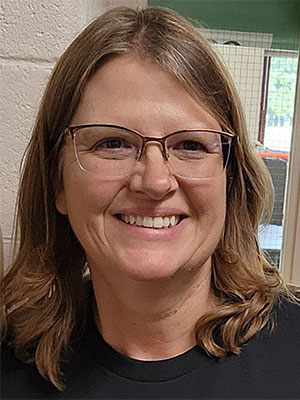
At NIU, Roberts enjoyed her hands-on preparation.
“During the practicum or clinical experiences, I remember in each semester that all of our courses paused for three weeks. They got you ready for your experiences, and then you didn’t have your methods courses: Bam! You were doing clinicals every day,” she says. “Then the rest of the semester was really unpacking what we did and learning more about it – and how we could do it better for when we would do our student-teaching.”
The self-described “sponge for books” also appreciated NIU’s course in children’s literature.
“It really helped me to be more discerning with the types of books that I was going to read with my kids,” she says. “It also exposed me to such a variety of children’s literature, not even just the new stuff but going back to the ’30s, ’40s and ’50s and different award winners and why they were award winners: What was so fantastic about this children’s book?”
Her career began in Harvard, Illinois, where she worked for a decade in bilingual classrooms.
“I was in a unique position where the district paid for my bilingual and ESL endorsement,” she says. “I had some great mentor-teachers there, and I learned a lot from them.”
That’s true of all her professional stops, she adds: “I’ve learned something from every teacher I’ve ever worked with, maybe how to be more like them or what not to do. I had a lot of both of those experiences in Harvard, and I feel like I took the best from everybody that I’ve ever met and tried to incorporate it the best I can in my situation.”
 Belvidere’s Washington Academy became her next home.
“Now that I’ve landed in the early childhood pre-K, I’m like, ‘Oh this is my favorite,’ ” Roberts says, “and I’m thinking to myself, ‘Why didn’t I do this 29 years ago?’ It’s where my heart is.”
Children, she says, “can learn anything. We just have to have the patience to take time with them and meet them at their level.”
“I want them to learn kindness and curiosity and patience. I want them to be good people. I’m not so concerned about academics in this pre-K setting. It’s really more about how to be part of a group and those interpersonal skills,” she says.
“When they leave me, they’re going to kindergarten. They’re going from a half-day situation to six-and-a-half hours, and it’s going to take a lot of their social-emotional skills to make it through the day,” she adds. “The academics will come later.”
GROWING UP IN Cherry Valley, Wight struggled as a student.
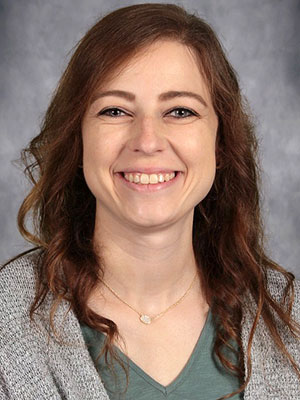
“Around the time of fourth-grade, I wasn’t doing well in school, and I felt like there were a lot of teachers and adults who were kind of telling me that I wasn’t good enough,” she says.
“Then, when I went to fifth-grade, my teacher, Mrs. Walker, changed my perspective,” she adds. “She really took time to make sure that all of her students felt loved. She made all of the lessons exciting. Her enthusiasm was so contagious.”
Quickly, Wight remembers, “I went from not really liking school much to, ‘Wow, school is awesome and fun.’ After fifth-grade, I’m like, ‘This is what I want to do. I want to be a teacher like Mrs. Walker.’ ”
Her chance came in 2014 in Lindenwood, where she taught one year, and then blossomed fully in Durand, her now-decade-long home.
“I love a lot of things about teaching,” she says. “I love to have an impact on my students every single day. I think it’s really important to set high standards and expectations for them, and creating relationships helps us to have a successful classroom.”
Wight’s classroom is, appropriately, much like Mrs. Walker’s.
Priorities are getting to know her students, determining their learning and personal needs and pausing the academics when necessary to offer an open and caring ear.
“Sometimes all kids need is for an adult to listen to them and understand what they’re going through or what their home life is like,” Wight says. “Why are they tired? Are they tired because their parents are fighting? Or are they tired because they didn’t have breakfast this morning and they’re hungry?”
The teacher makes sure her students know they are welcome, and wanted, in her classroom.
“Every morning, my students come in and they can do a high-five or a fist-pump or a thumbs-up, and that just starts off our day on the right foot,” she adds. “We also do ‘I can’ statements, and then they know what the expectations are. That sets the tone.”
 An “I can” statement?
“On my board today, I have, ‘I can multiply a fraction by a fraction.’ Students see that statement and they know that’s what we’re doing throughout the lesson,” Wight says. “We practice that skill. We ask ourselves, ‘Have we attained what we were supposed to attain?’ ”
The practice benefits students “because they know what we’re learning,” she says, “and it holds them accountable to remember when mom or dad says, ‘What did you learn at school today?’ ‘We learned how to multiply fractions today.’ ”
NIU prepared her well, says Wight, who enjoyed the small class sizes and the cohort structure.
“I liked that a lot of the professors were previous teachers of elementary ages,” she says. “They had that experience, so they could really relate to me and help me get an idea of what teaching would look like and what to expect as a new teacher.”
Eleven years later, she views her work as collaborative.
“Getting recognized is such an honor, but it’s also cool to show the community what we get to do in our classroom and the kind of atmosphere and culture that we have in Durand,” she says.
“When I told my two students who nominated me that I was a Top 20 finalist, and I showed them the news clip, they were shocked. They thought it was so cool that their teacher was on the news, and you could just see their faces instantly light up,” she adds.
“For me, my teacher-heart was about to explode. I was excited because they were excited, and we talked about how we’re working together as a team and how awesome it’s going to be to have the community come in and see what we do every day in our classroom.”
