

“Better luck next time,” the handwritten note on the letter read. “We’ve got him.”
The him, in this case, is Gaylen Kapperman. The we’ve is NIU. And the recipient? Ohio State University.
It stemmed from an innocent mix-up at the University of Northern Colorado, where two versions of a professional reference recommending Kapperman as a faculty member to those two schools somehow ended up in one envelope sent to DeKalb. Nothing was mailed to Columbus.
Realizing this, NIU professor Larry Hapeman merrily scribbled his victorious missive, licked and stamped his own envelope, dispatched it to his counterpart/competitor at Ohio State and reveled in his good fortune – all of this without actually interviewing or hiring Kapperman yet.
Fifty years later, the 81-year-old Kapperman is still hard at work in Graham Hall where the former-and-longtime (but now technically retired) director of the Department of Special and Early Education’s Visual Disabilities program maintains an office, conducts research, contributes to the literature of the field, presents at conferences, mentors the current faculty and collaborates with graduate assistants to develop and investigate their own projects.
And, despite its origins in a mistake, “coming to NIU was one of the best, if not the very best, professional decisions I’ve ever made. It could not have turned out better. I’m exceptionally pleased.”
Clearly.
Kapperman is fiercely proud of the College of Education’s Visual Disabilities program, which he calls the top in the nation and, perhaps, the world.
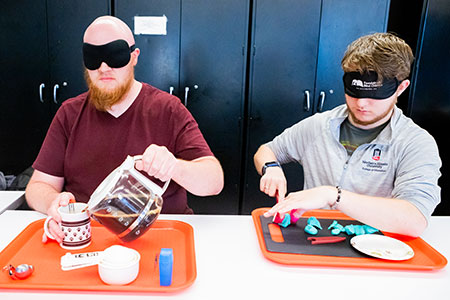
Between 500 and 1,000 teachers and rehabilitation specialists prepared here during those five decades since 1974, he estimates, which translates into services provided to as many as 50,000 children and adults who are blind or visually impaired.
Meanwhile, Kapperman and his Huskie colleagues have received more than $30 million – maybe north of $40 million, he speculates – in federal grant funding to financially support those hundreds of graduate students as they earned their master’s degrees here and trained for a uniquely skilled workforce desperately in need of qualified practitioners.
His research, much of it recently produced in collaboration with NIU Professor Stacy Kelly, attracts international interest, including throughout Europe.
“One of the areas that Stacy and I have concentrated on is sex education for youngsters who are blind and visually impaired because nobody does anything in that area. We’re the only two. We’ve published more on that topic than any other two people on the planet,” Kapperman says.
“South Africa’s government recently mandated sex education for all kids, and there are 14 schools for the blind in South Africa. The teachers had no idea how to do sex education,” he adds.
“Dr. Lindo Ubisi from the University of South Africa contacted us because he found us in the literature on the internet and now, for the last three years, he’s incorporated the training we do here at NIU with regard to sex education in his training of teachers as well as doing in-service workshops for the schools for the blind. Our efforts in the area of sex education have found their way to South Africa.”
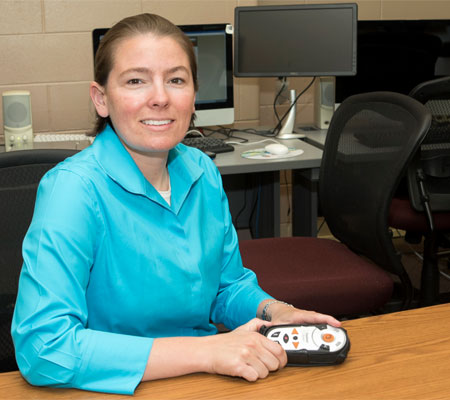
For Kelly, making a global impact is only part of the reward of working with the man who recruited her to NIU to earn her doctorate in 2008.
“It was nearly 20 years ago, in 2005, when I sent my very first email to Dr. Kapperman inquiring about a flier advertising the ‘Opportunity of A Lifetime’ available at NIU in the Visual Disabilities Program,” says Kelly, who eventually succeeded Kapperman as program coordinator.
“Remarkably, I am one of literally thousands of professionals in the field of visual impairments who has a ‘Dr. Kapperman recruited me to attend the NIU Vision Program’ story,” she adds, “and one of thousands of professionals in this field who knows that learning in the NIU Visual Disabilities program with Dr. Kapperman made all the difference in our professional careers in this specialized field. Amazing.”
WHAT HAS BECOME A celebrated and ongoing career has humble beginnings.
Born to parents Gerd and Dorothy on the kitchen table of their farmhouse, Kapperman is one of five siblings who grew up near tiny Deshler, Nebraska. The family was perpetually poor, he says, and by the time he turned 12, they were broke and sold the farm.
Moving his brood the 10 miles into town, Gerd bought and operated a pool hall, putting his preteen son to work sweeping floors and stocking the cooler.

Two years later, on the first day of Kapperman’s freshman year of high school, Gerd died unexpectedly, leaving Dorothy with five young mouths to feed and an additional challenge beyond early widowhood and meager finances.
Gerd and Dororthy both carried a recessive gene for Stargardt’s disease, which causes the light-sensitive retinal cells to wither over time.
“And if you live long enough, all of the cells will deteriorate and you’ll eventually become totally blind,” Kapperman says, “and I did. I have two sisters who are also totally blind now, and we have one brother and one sister who are lucky survivors. They’re fully sighted.”
While Dorothy declined to send her three affected children to a school for the blind located about 130 miles from Deshler, she did find an optometrist in Colorado “who had developed low vision aids – real thick, funny-looking glasses – and she drove us out to Denver to get fitted for these.”
Home to about 1,000 residents in the 1950s, Deshler unsurprisingly had no teachers trained in special education for children with visual impairments, so the Kapperman trio “just made our way through. My sisters would not use the low vision aids in school because they looked so funny. I did not care. I just wanted to read.”
Kapperman was a bright student and eager learner, something Mrs. Murphy, the high school librarian, recognized.
“One day – and remember, this is ancient times – we were looking at the encyclopedia, and she told me, ‘You know, the men who have their Ph.D.s know everything that’s in the encyclopedia,’ ” he says. “I was probably a sophomore in high school, and I decided that I would like to know everything in the encyclopedia like the men who have their Ph.D.s. I wanted to get a doctorate in some sort of discipline.”

First, of course, he would need a bachelor’s degree.
That pursuit took place at Doane College in Crete, Nebraska, where Kapperman double-majored in mathematics and German while earning his certificate in secondary teaching. The math was so that he could become a teacher; the German fulfilled a lifelong interest – and later would prove beneficial.
“I grew up in a German-speaking community, and, as a youngster, I thought that all old people spoke German. I wanted to learn German, but my mother would not teach me. She actually knew German before she knew English,” Kapperman says. “Doane required a couple courses in a language, so it was my opportunity to learn German.”
BY THE TIME KAPPERMAN graduated in 1967, he had not only married his wife, Susan, an elementary education major, but also had come to another life-altering choice.
“I was going to be a high school math teacher, but then I decided that because I was visually impaired, maybe I ought to start teaching blind kids – and, actually, I didn’t know any blind kids,” he says. “I did have a rehabilitation counselor who was totally blind, and he was actually the very first blind person I ever met. He was really a great guy, and so I asked, ‘Where can I go to become a teacher of blind kids?’ He named a couple places. One was Vanderbilt. Another was the University of Northern Colorado.”
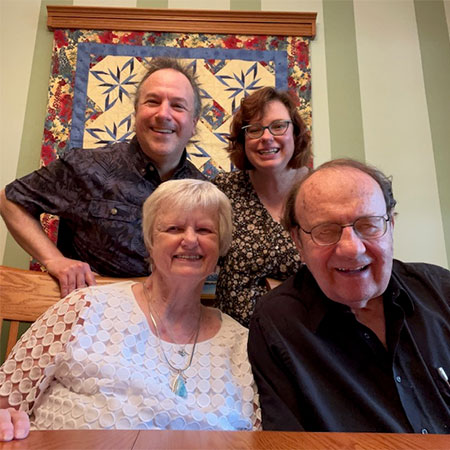
Mr. and Mrs. took the nearby option, moving to Greeley.
Susan taught at the lab school for children with emotional challenges while her husband completed his M.S.Ed. in Special Education for children with visual disabilities – and, at that point in 1968, the future professor was ready to pursue another burning ambition, one that would make the four years of German pay off.
While at Doane, Kapperman joined a fraternity where he routinely heard his fellow members extol the virtues of Fulbright fellowships.
He quickly realized that he wanted one – one that would take him to Germany. His application was approved, making him the first student with visual impairments to achieve that distinction.
“As a Fulbrighter, who could study in any of the universities in the country you where you wanted to go. You had to pick, and I had no idea,” he says.
“So, I wrote a letter to the German cultural attaché in Washington to find out where you could go in Germany to study the special education of blind and visually impaired youngsters,” he adds. “It took a while because they had to research it themselves, and it was Hamburg, Heidelburg and Hanover.”
Kapperman then sought advice from a professor of German at the University of Northern Colorado, who recommended Heidelburg.
 The young couple then boarded a ship with other Fulbright recipients to sail across the northern Atlantic to Germany, where they spent the 1968-69 academic year.
As they prepared to return to their home country, the Kappermans made a list of states where they would want to live; next, Kapperman mailed queries to all the schools for the blind in those states. One reached the Kansas School for the Visually Handicapped, where the superintendent had just lost two teachers: math and, yes, of all things, German.
“I was hired instantly. No interview or anything,” Kapperman says. “We had no good telephone system, so it was all telegrams, back and forth, back and forth, back and forth.”
From 1969 to 1972, he taught in Kansas while never forgetting what Mrs. Murphy had told him about Ph.D.s and encyclopedias. The next two years were spent back at Northern Colorado, where Kapperman earned his Ed.D. in Special Education Administration and Research in 1974.
Days later, the couple made their next, and final, stop: DeKalb.
NIU HUMAN RESOURCE SERVICES records indicate that Kapperman retired in 2012, but his work as a faculty member has never stopped.
Joining him for the last quarter-century have been his guide dogs, all from The Seeing Eye, Inc. in Morristown, New Jersey. Xarby came first, Judd replaced him and Orion now serves as Kapperman’s faithful companion.

Daughter Gretchen Kapperman, meanwhile, has joined her father’s profession. A teacher of the visually impaired with the Milwaukee Public Schools, she earned her M.S.Ed. in Special Education: Visual Disabilities in 2005.
“Many, but not all, of our students have family members who are blind or visually impaired. That’s what gets them interested in working with blind and visually impaired individuals,” Kapperman says. “So, she came here as my graduate assistant, worked with me and got her master’s degree. She did a dual major, teaching blind kids and also Orientation and Mobility.”
A half-century on the job is a long time to stay on top of evolving trends, no matter the field, and Kapperman has that covered in his.
What’s changed the most, he says, is assistive technology.
“In 1974, we did not have much technology to speak of, and I was the first professor in the country to incorporate training on technology for blind and visually impaired people into our program for training teachers,” he says.
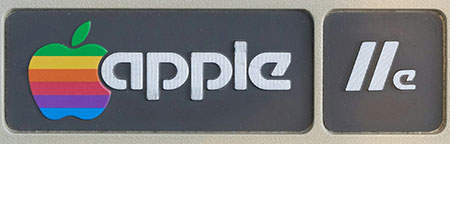 By the early 1980s, he adds, “there was a program called Talking Text Writer that you could load onto an Apple IIe, and you could make the computer talk. I got that for myself, I learned it and I thought, ‘This is absolutely terrific.’ I went to the dean at that time, I got grant money and we established a technology lab in Graham Hall, and that’s where I loaded it up. We had the first assistive technology lab at the university.”
Off-campus administrators of services and resources for people with visual impairments also heard what Kapperman was doing, which led to his delivery of training workshops for practicing teachers.
“That was amazing. I remember teaching people for the first time how to use computers – adults!” he says. “That was amazing. They were just blown away.”
NEARLY FOUR DECADES later – 38 years for those counting – Kapperman’s official title at NIU added the word “emeritus.”
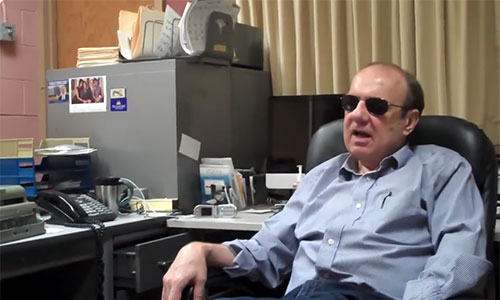
Yet to slow down because of that? Or leave? Not a chance.
“I like working,” he says, “and I really don’t have a lot of friends, to be bluntly honest, because nobody has my interests. You know, a lot of older guys like to play golf. I don’t play golf. I can’t play golf. The interests that I have? Nobody who is 80 years old has my interests.”
Kapperman’s off-the-job pursuits are all intellectual ones, he says. Evolution. Paleontology. Aspects of sexuality, especially those he has investigated from the visual disabilities lens. If not for his visual impairments, he adds, he would’ve become a medical doctor.
And, of course, what truly excites him is helping the special population to which he belongs. It’s why he’s developed and conducted research on sexual crimes committed on people who are blind or visually disabled along with self-defense strategies that can assuage that epidemic.
His reason is simple.
“We blind people are socially devalued, and there’s plenty of evidence to indicate that sighted people don’t value us at all. For whatever reason, they’re afraid of us, or they feel uncomfortable around us, or they view us as strange or odd, or they don’t know how to interact with us,” he says. “We’re socially isolated. I’m a good example of that, and the more blind you are, the more isolated you are.”
The solution, Kapperman says, is equally simple.
“I would like the rest of the world to know that blind people are just like sighted people. We have the same wishes. We have the same desires. We have the same ambitions,” he says. “We’re just like sighted people, except that we cannot see.”

