

Leslie A. Sassone had no clue of what she might find when she clicked on the familiar face of Special Education major Andriana Williams in the Huskie Spotlight section of the NIU homepage.
But there it was.
Responding to a question asking her to name her favorite professor, Williams began her answer with Sassone.
“One of my favorite professors is Professor Leslie Sassone, who teaches Philosophy of Education. Being in that class gave me a new perspective on life and education,” Williams wrote. “Professor Sassone was real and raw. She gave it to you honestly, which I appreciated because not everyone has the guts to do that. It also makes you want to fight and gives you the drive to do better.”
Sassone is genuinely humbled at the words, especially as they come just days before her retirement from NIU after 25 years on the faculty.
“The truth is, I’ve always been like this. I’m just less apologetic about it right now,” she says. “Philosophy of education is raw, and it is real, and that’s what I’ve learned from teaching, and I’m going to miss that so much. I’m going to miss the beginnings – and the possibilities.”
It’s not the first time Sassone has received the endorsement of the students: NIU Honors students chose her in 2018 to receive the Great Professor Award.
And, five years before that, during the inaugural ceremony for the then-president of NIU, an Elementary Education major named Elisa Lopez was among the students who spoke to the audience about their lives as Huskies.
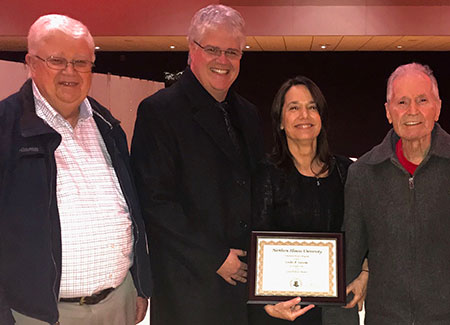
Driving to South Elgin that afternoon to teach her Juggling in the Classroom curriculum, Sassone missed the event – but her father, Nick, and her father-in-law, Don, had tuned in online.
“They’re at the dining room table playing Double Solitaire, because that’s what they did for multiple hours every day together, after my dad had a stroke and moved in with me and my husband, Mark, and listening,” Sassone says. “Don calls and says, ‘Oh, Elisa Lopez just said the most wonderful things about you – that if it weren’t for you, she wouldn’t have been able to stay in school. Her mother had just died.’ I had no idea. No idea.”
Yet there was more, he told her; Lopez had shared that she was experiencing food insecurity, and was unable to pay the electric bill to keep the lights on at night to study or complete homework.
While Sassone was unaware of those issues, she understood the shoutout.
Her Department of Leadership, Educational Psychology and Foundations office on the fourth floor of Graham Hall always was stocked with bottles of water, granola bars, Lara bars, nuts and more for the taking. Students always were welcome to hang out around the round table or to lounge on her chairs and couch, whether to study or just chat.
“I’ve always had food in my office, ever since I started teaching. I learned early on that students don’t eat breakfast, and this was well before we had the term ‘food insecure.’ This was just normal to me. That’s just who I am,” Sassone says.
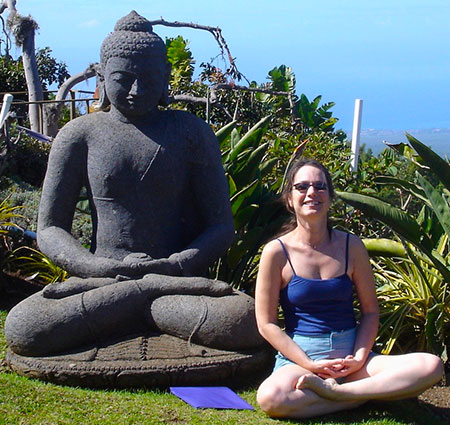
“And what did I learn from teaching? That if I didn’t meet these people as human beings, that I wasn’t teaching anything. Whatever it was that I was teaching, and the beauty of my curriculum, is philosophy. If I’m not asking these basic questions, and living them, then I’m not doing anything.”
Sassone thanked her father-in-law for the call – “That’s great, Don. That’s awesome,” she told him – and went into the elementary school to juggle.
Later, Don had an update, one that held another surprise for his son’s wife.
“I remember my father-in-law saying, ‘Leslie, Dr. Baker just mentioned your name! He said Professor Sassone went to extraordinary lengths to ensure that Elementary Education student Elisa Lopez, who spoke earlier, had what she needed to succeed and feel at home when she arrived at NIU,’ ” Sassone says.
“I just thought about that now because I want to be surprised about my future,” she adds, “and I want to remember all the positive things where I’ve made a difference.”
FOR SOMEONE WHO NEVER expected this life – a high school dropout from New York City who returned to education after a career on the radio as a disc jockey – Sassone is grateful for her journey.
She earned a bachelor’s degree in Media Systems and Management at Westfield State College, expecting to return to the airwaves, but that didn’t happen.
An unanticipated passion for philosophy led her to graduate school at Purdue University, where in 1988 she earned an M.S.Ed. in Communication and Speech Education and, in 1994, a Ph.D. in Educational Studies.
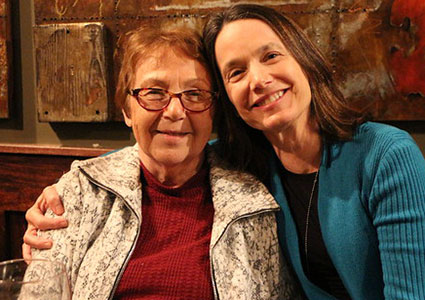
Guiding future teachers in exploring, questioning and comprehending the rationales behind their practice is “a blessing” that Sassone treasures.
“The part of the job that made it a job wasn’t usually the teaching. I say that with the understanding that sometimes I could get buried behind mountains of papers and grading,” she says with a laugh.
“But what an opportunity to engage with young people on the most important questions. Why are we doing what we’re doing? Who is it that’s doing it? Why is it you? How are we doing it? And then I got to continually, through all of my different periods of time and experiences, ask those questions also.”
Honestly, Sassone adds, “the reality is that every semester I was asking the same questions over and over again because I didn’t have answers that I could just give them because that’s not how philosophy works. You don’t get it by acquisition.”
“I loved that I was paid to philosophize and to be in dialogue about the most meaningful questions, talking about the things that really matter, with students – impressionable students, struggling students – and then, of course, how to translate some of those important things into curriculum that they could take into their practice, not just into their life,” she says.
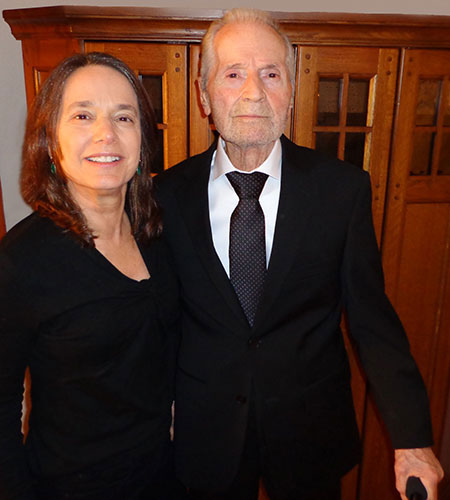
“My focus was on literacy, and that levels the playing field,” she adds. “If we couldn’t interpret the text, or how we each were interpreting the text, that was something every semester we needed to navigate and negotiate through. I don’t always generate the questions – the questions come from them – and I don’t always have that process where then I’m drilling down to some answer that I expect they already know.”
ALTHOUGH SASSONE DIDN’T expect that she’d spend much of her life teaching, that outcome did seem within reach in 1975.
“I once voiced that I was going to be a professor. This was under a starlit sky at Lake Champlain in Plattsburgh, New York – my first of three attempts at an undergraduate education – and the person I was with and I looked at the stars and talked about that, and we laughed,” she says. “Twenty-plus years later, it turned out to be true.”
With that chapter now ending, and with the freedom it will provide her calendar, she’s contemplating a return to research and writing: “When I think about my career, I know that if it was a matter of me talking to a student, or writing for publication, I would always talk to the student.”
But, always open to the unexpected, she doesn’t want to promise anything.
The Leslie A. Sassone who hung up the headphones and traded the microphone for a stack of textbooks and three college degrees has stood on this precipice before, of course, although the professor she became now stands in the same place to face the great unknown of retirement.
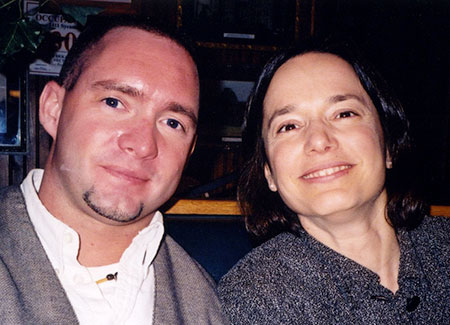
“What I want that young person to say to me is, ‘You weren’t afraid then. Don’t be afraid now. You didn’t know what you were doing when you thought you were stepping one way, but you were open. Don’t let fear stop you from making the next step,’ ” she says. “I have no idea what’s next. All of this is uncharted. I have never been here before.”
Going with her, however, is the realization that she made a difference for students.
She thinks of an alum named Nick Shudak, who graduated from her classes so ignited about the philosophy of education that he earned the nation’s only full-ride, doctoral scholarship in the discipline to continue his studies at the University of North Carolina.
She thinks of an alumna named Gwynne Ryan, who was so impacted by Sassone’s teaching that she still returns to the professor’s classrooms – even Zooming in this semester – to impress on current students the importance of writing their personal philosophies of education.
“This woman still has the statement that she wrote in our class in the late 1990s hanging on her wall,” Sassone says, “as a way to remember where she came from.”

For her part, Sassone will remember that she was always “upfront” with students and colleagues.
She will remember that she was always “a perpetual beginner,” one who recently created an assignment related to Google Classroom so that her future teachers were prepared with that skill in their toolkit.
And she will remember that she made the right choice, whether it was ordained in the stars over Lake Champlain or simply the result of an undergraduate course that unearthed a curiosity and a passion within her.
“I continually had to accept that I attended to the needs of students as best I could, with what I knew at the time, knowing that I can’t get to everybody all of the time, and that I make mistakes and miss stuff,” she says. “I tried hard every day. I was just normal. I was just me.”
