Future educators about to begin their student-teaching semesters need no additional motivation or excitement for that next step.
Yet Selina Bartels will provide just that.
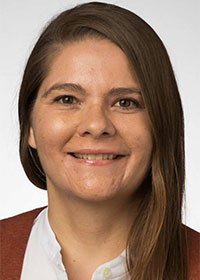
Bartels, an assistant professor of education at Valparaiso University who earned her NIU B.S.Ed. in Elementary Education in 2000, is the keynote speaker Friday, May 13, for the Student-Teacher Send-Off event.
And Bartels knows exactly the powerful differences that even first-year teachers can make in the lives of their students.
She remembers well the required reading a first-year teacher assigned in her suburban hometown of Plainfield: “There Are No Children Here,” Alex Kotlowitz’s book about two brothers growing up in Chicago’s Henry Horner Homes.
“I thought, ‘That’s where I want to teach when I grow up,’ ” says Bartels, who did indeed teach for four years at Arai Middle School and for five years at Uplift Community High School before entering higher education.
Joining the Chicago Public Schools fulfilled a lifelong dream, regardless of location: “I’ve always been called to teach,” she says.
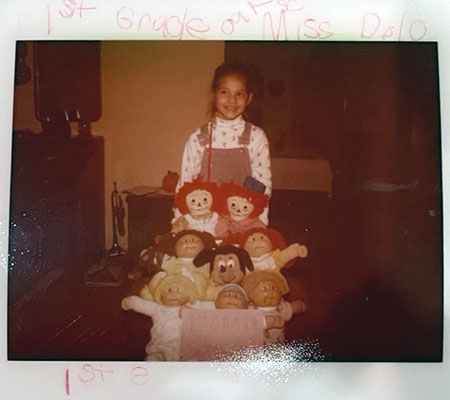
“There are pictures of me teaching my stuffed animals and taking class pictures – lining up my students, who are stuffed animals, for class pictures – and bossing my sister around,” she says. “And, through my church, I had an opportunity to teach Sunday School, basically from the time I was in middle school all the way up through high school.”
Meanwhile, her high school chemistry teacher “really harnessed my passion for the sciences and the lab” – areas that eventually would define Bartels’ career in education.
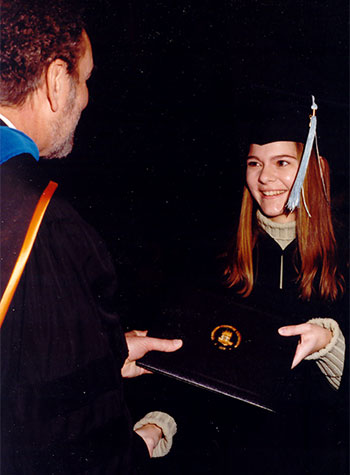
During her time at NIU, though, she discovered another passion: social studies.
“We had to take a U.S. history class, and I had this really great lecturer in the NIU Department of History, so I just decided to minor in history based on that coursework,” she says. “I took a lot of classes that they were teaching, and I found history to be really engaging: There are 75 kids in a class, and we’re reenacting events from the Civil War.”
Once in Chicago teaching literacy and science, she needed an endorsement in the latter, leading her to a master’s program in Science Education. Completing that degree in 2007, she later earned a Ph.D. in the Philosophy of Science Education in 2016.
Valparaiso students in her classes now learn about scientific literacy, how students in elementary school understand science, how preservice teachers understand science and how to develop successful lesson plans for STEM activities.
Her career, she says, promotes “hands-on, student-centered investigation.”
“My undergraduate experience at NIU directly translates into my program that I’ve helped shape here at Valpo,” Bartels says.
“Our goal is that we create this ‘cohort feeling,’ where our students come in and have four years of an experience that emulates a teaching faculty at any school they’ll go to after they leave,” she adds. “They work with their peers to create lesson plans that will be integrated, so that we teach our preservice teachers to teach across the curriculum.”
No Child Left Behind provided an impetus, she says.
“Right now, we’re in a crisis were social studies and science are marginalized. They’re not taught in our elementary schools,” she says.
“Our real focus at Valpo is to create an integrated curriculum where I teach with my fellow professor on how to teach science through literacy; how to teach math and science together; how to build social studies lessons that teach toward literacy; so that those content areas don’t get marginalized.”
The “ultimate goal,” she adds, “is that we graduate preservice teachers who are prepared to create, and teach toward, citizens her in the U.S. so that they can go out and be productive citizens and make decision about their lives.”
Bartels roots that philosophy in her NIU education.
Professors in Graham and Gabel halls taught her instructional strategies that she still applies now, such as having students ask questions of each other and helping students to engage in their own learning to see how it connects with what’s happening in their community and their world.
“What I learned at Northern is to cultivate the whole student, and to teach to every student in your classroom,” Bartels says.
“When I ended up in the middle school, I used all of the same strategies that I would use to teacher first-graders, and I think that’s what made me such an effective teacher,” she adds. “I wasn’t thinking about teaching them history or teaching them literacy or teaching them science. I was thinking about cultivating a whole person – and how to create an informed citizen by the time they graduated from the school where I was teaching.”
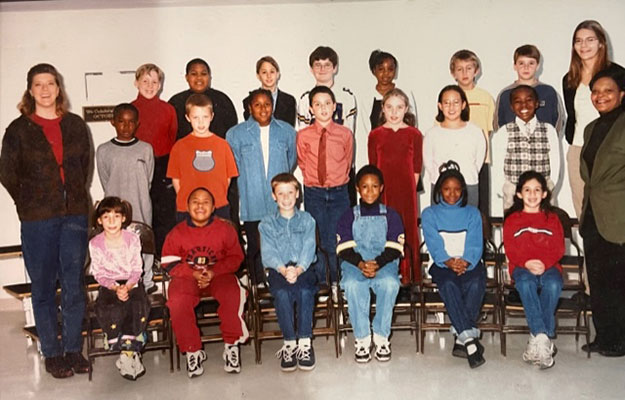
Concepts of critical thinking also drive her scholarship.
“My research line that I’m currently in is building scientific literacy in children,” she says.
“I am really trying to create a movement that I think is really critical now on the back end of COVID: It’s clear that our society is not scientifically literate. We can’t make decisions about our own health because we don’t understand how science is done,” she adds. “I’m really trying to create a movement in schools where we move away from teaching content and we really focus on teaching how to consume content and to make decisions about science content.”
For example, she says, “we want kids to be able to know when you should get a second opinion after seeing the doctor, or how to take multiple options, and to make decisions for themselves.”
Developing that skill can translate beyond science to “making decisions about how to vote on big political matters, or what products to consume, such as what to eat or which car to buy,” she adds. “I’m really working on preparing teachers to create experiences in the classroom that make scientifically literate students.”
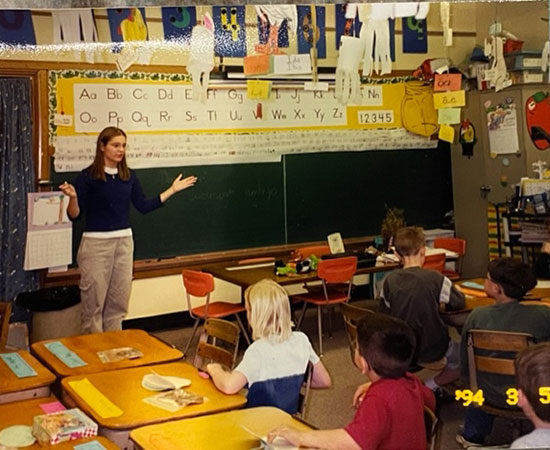
Bartels, who is also managing editor of the Journal of Science Teacher Education, is excited to talk to the NIU licensure candidates following in her footsteps.
“The theme of my pep talk is ‘Forever a Huskie Teacher,’ ” she says. “I want to focus on how you take this undergraduate experience – you’ve just spent four or five years becoming a teacher – and how you’re going to go out in the world and you’re going to influence so many students and their families.”
She speaks from experience, she says.
“Your Northern undergraduate experience really translates, and really impacts your teaching for the rest of your life. NIU is the first time that anyone teaches you how to do an interactive read-aloud. NIU taught you how to teach math and how to teach a student-centered science lesson,” she says.
“You’re going to learn more things along the way,” she adds, “but Northern is really what builds the foundation of your teaching.”
And Bartels is thrilled to revisit the place where she laid her own professional groundwork.
“I’ve been back to NIU for football games and things like that, but I haven’t actually been back to the College of Education,” she says, “so I’m excited to come back and to be in the space where my whole teaching career began.”
