
 Early CHOICES is returning to NIU.
Funded by an Illinois State Board of Education Training and Technical Assistance grant, the initiative that launched on campus in 1990 focuses on the “least restrictive environment” (LRE) for children ages 3 to 5, which is a requirement of the Individuals with Disabilities Education Act.
It also assists school districts that already are educating children with disabilities alongside their peers without disabilities as well as programs that would like to amplify their capacity to do so.
Collaborations with early childhood programs across the state have boosted the percentage of young children with disabilities who are learning in regular settings, which has positioned Illinois higher than the national average in this measurement since 2019.
Quarterly webinars, as well as individual program supports, are provided to interested school districts and programs to design action plans to improve their outcomes.
Meanwhile, Early CHOICES offers multiple professional learning opportunities related to early childhood inclusion that are available to anyone in Illinois, with continuing education credit for professionals across the field.
The Early CHOICES initiative hosted institutes on inclusion the past two summers that brought together more than 150 people, including educators, families and administrators to learn about creating inclusive programs and implementing inclusive practices.
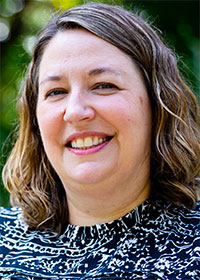
Michelle Sands, assistant professor in the Department of Special and Early Education, now serves as the principal investigator on the grant and is responsible for the project’s conduct, reporting and compliance with the state board.
She is honored by the opportunity to partner with a nationally known program that was highlighted in the 2023 Policy Statement on Inclusion of Children with Disabilities in Early Childhood Programs from the U.S. Department of Health and Human Services and the U.S. Department of Education.
“The team at Early CHOICES has gone above and beyond and are leaders in the field of providing support for inclusive practices,” Sands says.
“My goal is the same as what is put forth in their vision and mission: that we increase the number of students who are in early childhood environments and have disabilities,” she adds, “and have them in regular education or general education settings, by empowering families and by empowering teachers and programs to use high-quality, inclusive practices.”
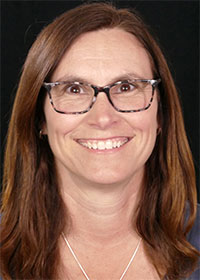
Ann Kremer, who earned her NIU master’s degree in Early Childhood Education in 2003, has served as the Early CHOICES project director since 2014. The School Association for Special Education in DuPage County, which held the original ISBE grant, subcontracted to NIU until 2007.
Other staff members are Emily Ropars and Talin Tokat, who work as LRE specialists, and Professional Learning Coordinator Amy Bain.
Kremer defines the goal as long-term, systemic change.
“We provide professional learning, and we invite anyone to come,” Kremer says, “and when folks ask for technical assistance or support, we have a strategy for that. We will, of course, support anyone – a family member, a teacher, an administrator – who wants to make changes to their program. Then, we have a collaborative agreement that we work through with them and say, ‘Here’s what we’re going to do to support you, and here’s what we need from you to get the work done.’ That assures us that we are using our resources most effectively.”
Restoring NIU as the initiative’s fiscal agent offers an additional benefit by connecting Early CHOICES staff and licensure candidates in the Department of Special and Early Education.
Both share a common philosophy and a strong belief in evidence-based practices, Sands says, and the Early CHOICES team is interested in serving as a guest speaker during classes.
Meanwhile, Sands and Kremer are pondering possible partnerships on campus and in the community.
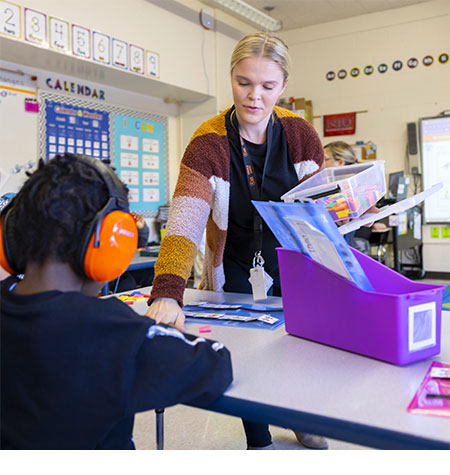 “One of what I think is best ways of addressing the need for high-quality, inclusive practices is by supporting our students who are going to be the future of our field,” Sands says, “and giving them the great knowledge and skills they need to be able to use inclusive practices right off the bat as they start their new careers paths. We want to prepare our students to educate all children.”
Research is also on the agenda.
“We have been doing this work for a while, so we have a lot of data,” Kremer says, “and we would love to be able to dig into some its potential and look at how our work changes some of the statistics and what has the most impact and the best outcomes for kiddos.”
For Kremer, the return to NIU is a double-homecoming as an alumna and a former employee.
In 1990, she was an elementary school teacher who became the mother of a now-35-year-old son with Down syndrome, something that prompted a curiosity in disability.
“After he was born, I worked in early intervention, which is for birth to 3 – little ones who have disabilities – and that got me interested in inclusion,” she says.
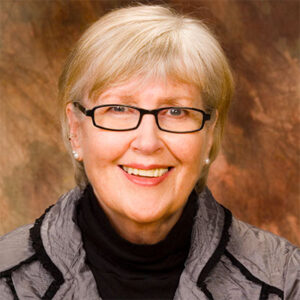
Kremer soon found a mentor in Sharon Freagon, then a professor in the NIU College of Education who later led the university’s Center for Child Welfare and Education from its inception in 2000 until her retirement in 2007.
“I attended any event I could to hear Dr. Freagon and her CHOICES colleagues talk about inclusion to learn how to make it work for my son. Eventually, I was able to join the team,” Kremer says. “I started as a parent consultant and then I became an educational consultant. I got my master’s in early childhood at NIU while I was doing that, and then I just stayed with the project.”
Nearly three decades later, Kremer is a mentor herself.
Kremer recently presented at the 2025 International Early Childhood Inclusion Institute and the National Training Institute on Effective Practices: Addressing Challenging Behavior and will speak at the TASH conference in Denver this December.
She also serves with several leadership teams, including the Illinois Pyramid Model State Leadership Team and the Early Childhood Least Restrictive Stakeholders Consortium.
