
 Creating a culture of belonging starts with self-examination.
“When we’re thinking about belonging for students,” says Bess Wilson, chair of the Department of Special and Early Education, “I think that we have a natural tendency to lean toward, and empathize with, students who have similar backgrounds to our own.”
So, Wilson asks, “in trying to increase that empathy for what it might be like to be a student who’s a first-generation student, or a student who’s housing insecure, or a student who isn’t part of the majority culture, how we intentionally create spaces to hear and listen in our class? How do we reach out and connect to students?”
During her days as a professor, she found ways that worked. Those included “short check-ins” at the beginning of each class period.
“That’s just like facilitating conversations – asking students how they’re doing, but then also having students share about pretty low, minor things, like, ‘What’s your favorite breakfast cereal?’ just to get them to start finding commonalities and to find a sense of community,” she says.
“I also think it’s important that we spend time acknowledging what makes each person individually unique and important to our community,” she adds. “I personally do this by writing lots of notes to people. Once or twice a semester, I just put a little note in everybody’s box that says, ‘Here’s why you are an important part of our team.’ ”

But Wilson, like other administrators, faculty and staff in the NIU College of Education, realizes that purposeful actions are not always enough.
Human beings often feel, and struggle with, what’s called “belonging uncertainty.”
Packed within that concept are imposter syndrome, stereotype threat, racial anxiety and more – all of which can cause people to expend significant energy questioning their place in a way that detracts from their ability to thrive and contribute meaningfully – and that’s why the college is proactively working and striving to nurture a climate were all feel welcome, valued, heard, seen and safe.
Eric Junco, the college’s director for Equity, says those “critical contributors” to belonging uncertainty “create an ongoing sense of self-doubt, heightened vigilance and emotional exhaustion that undermines individuals’ ability to feel secure in their environments.”
“We know that self-doubt, regardless of its intensity, undermines achievement, and it does so through a subtle, yet ultimately destructive, process,” Junco says.
“Let’s say, for example, I’m a student, and I feel like other students might think less of me for answering a question wrong. That self-doubt I’m feeling would impact my behavior first. I would be less likely to raise my hand or maybe share ideas with my group,” he adds. “In these cases, students might not only hold back from participating but also avoid opportunities to engage in academic content due to the risk of criticism or failure.”
Farah Ishaq, assistant professor of Sport Management in the Department of Kinesiology and Physical Education, encourages his colleagues to serve as collaborative partners with each other and with students to foster a flourishing culture.

Doing so requires a realization that “if a student feels a sense of belonging in one classroom but doesn’t in another or in another area of campus. It’s just not as effective.”
“One of the things I talked about is the idea of bias reduction – diverse representation and lectures and guest speakers in the classroom,” Ishaq says.
That’s available off campus as well.
He recently made sure to take a few of his female students in a male-dominated major and profession to a Sport Marketing Association Conference panel discussion that featured all women. In that moment, those Huskies glimpsed representation – their place – and possibilities.
“Another area that’s important is the idea of increasing interactions, and this is important for both students in the classroom in person and for those completing online coursework. It’s not just interactions with me – the instructor – but also with their peers as well,” he adds. “One thing we can do to increase overall interactions, particularly with peers, is understanding how we can utilize the classroom space to get students talking to each other.”
Like Wilson, he endorses the personal connections.
“Having those check-ins throughout the semester allows students to say, ‘Hey, my faculty or staff or instructor cares about how I’m doing throughout the classroom, cares about my progress in the course and cares about my sense of belonging,’ ” Ishaq says. “This can be seen as a form of validation.”

Junco would agree.
“When thinking about belonging, I think I used to underestimate the type of impact I was having on students,” he says. “I’m learning that we all play a significant role in how students, faculty and staff perceive belonging.”
Those impacts fall under three categories: support, recognition and connection.
Recognition, Junco says, is not always a pat on the back or a shout-out. Sometimes, he says, “it’s normalizing struggles and celebrating effort in our classrooms. I try to make a practice of asking students what seems hard about the assignments I give before telling them ways I might help.”
Meanwhile, recognition can come in the form of comments written on what students submit.
“I try to acknowledge unique ideas, and I make a point of telling students I appreciate them for their efforts before providing more-critical feedback,” Junco says. “I’ve found that I’ve been able to encourage a lot more engagement and additional effort on classroom assignments and revision opportunities this way.”
He also remains conscious of his own opportunities for revision.
“Belonging isn’t static. It’s nurtured by each of our actions and interactions. Even small actions – remembering a student’s name, recognizing cultural heritage or listening to student concerns, and echoing their concerns, during a difficult conversation – can have profound impacts,” he says.

“In my own work, I’ve shifted from asking, ‘What can I do to help students adapt to this environment?’ to ‘How can I adapt my approach and my class to meet students’ needs?’ That perspective has completely transformed my interactions with students and colleagues.”
Wilson also recommends self-questioning.
The work of belonging requires “thinking about our entire college, department and classroom as a community” and that “every single member is important,” she says.
Yet it also requires not painting with that same broad brush.
“It’s easy when we get annoyed, or we get tired, or we get overwhelmed, to brush it off and say, ‘Well, that group of people,’ or, ‘Kids these days,’ ” she says, “without thinking that intentional, positive, human regard to each person is what buildings belonging.”
For example, “it’s thinking, ‘Why might a person be reacting in this way? Why might a person not be doing this?’ I hate it when someone says, ‘Oh, they’re just being lazy.’ What are the reasons why a student might not be doing that work? There’s a multitude. Maybe it’s mental health. Maybe it’s systemic. Maybe it’s lack of motivation because they don’t feel like they belong. How can I help fix that root cause?”
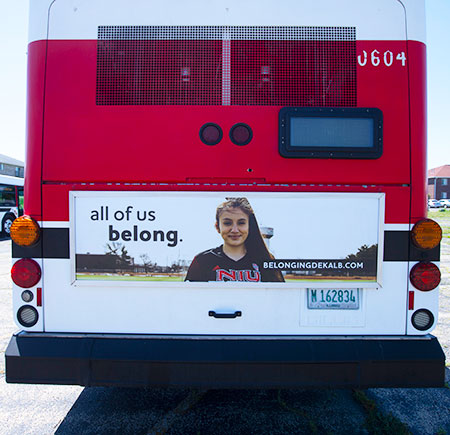 All are confident that a mindset of affirmation will bear fruit.
“I have explicit conversations about my intention to be an ally and/or an accomplice for my students with marginalized identities,” Junco says. “I’ve witnessed some of my quiet students from marginalized identifies blossom when they learned that I wanted to embrace them for their individuality, support them in their challenges and learn from their perspectives.”
“Belonging lays the foundation for what we do,” Wilson adds. “As we’re training future educators and future professionals, we want to bring that sense of belonging out into our communities as a service. All of these pieces create that ecosystem of care, empathy and respect.”
Eric Junco contributed to the writing of this report.
