

Kildeer Countryside School District 96 is home to around 3,400 Pre-K-through-eighth-grade students who live in southern Lake County, a diverse community where more than 60 languages are spoken.
Five of its seven buildings are U.S. Department of Education National Blue Ribbon Schools. Nearly three-quarters of its 250 faculty members hold master’s or doctoral degrees.
And, thanks to the support and full funding of their employer, 42% of KCSD96 teachers have earned NIU’s M.S.Ed. in Literacy Education with a specialization in English as a Second Language/Bilingual Education since the 2015 launch of a cohort-based partnership between the district and the university.
Most of the 170 teachers who began the 33-credit-hour program completed their degrees, says Jane Pedersen, assistant superintendent of Human Resources.
“The district had an increasing number of English language learners (ELL), and we really wanted to make sure that our teachers were well-prepared to support the students in their classrooms,” Pedersen says.
“When we started, we had more staff members than could fit in each cohort, so there was some degree of having people and prioritize,” she adds. “Because it’s been going so long, it’s mostly newer teachers or newer staff members who are coming in and who want to get that degree. The current cohort is 25; it’s a pretty perfect size. We didn’t need to turn down anyone.”
Pedersen sees multiple advantages beyond enhanced service to students.
 “It’s about building capacity within our staff members,” she says.
“Especially at the elementary level in particular, it’s created a lot of capacity where we have a ton of staff members who are ELL-certified and who understand the needs of those linguistically diverse kids in their classrooms. We’re getting staff members who are highly trained,” she says. “It’s also provided our ability to have a strong instructional coaching program. All of those staff members who have their ELL certification are able to support our teachers and students as well.”
Such camaraderie also thrives during the course delivery, which takes place online (both synchronously and asynchronously) or in person in a KCSD96 school. The model offers flexibility in scheduling and opportunities for collaboration.
“Our staff enjoy the cohort model,” Pedersen says. “They’re working with other people in the district, so they have that ongoing ability that, if they need help from another student or have questions about an assignment, the other students are working either in your building or one of our other schools.”
Jason Klein, the NIU College of Education’s senior director of Learning Partnerships, counts three reasons why this relationship “is particularly notable.”
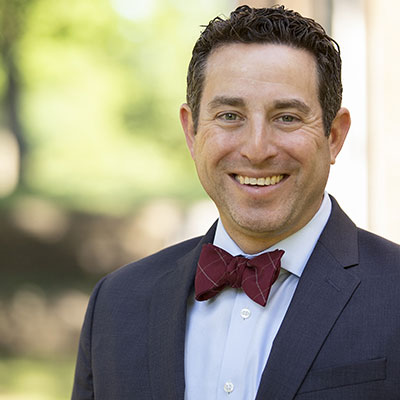
“First, like many of our partners, this is now a long-standing partnership with cohort after cohort,” Klein says.
“Second, KCSD96’s desire to offer the full master’s degree to their staff is a really strong signal of their efforts to support teachers with their own learning – and their students with teachers who deeply understand the complexity of the classroom,” he adds.
“Third, it is so very cool to see how KCSD96 has prepared such a high percentage of teachers through this program to support all of their learners with the strategies that they have learned as part of the bilingual-ESL endorsement.”
Pedersen returns the compliments on behalf of the district.
“Being a state school, NIU has done a great job in partnering with us to make it so that it’s an affordable option,” she says.
“There’s also a high level of collaboration,” she adds. “When I was planning for our current cohort, I reached out to NIU to make sure that the cohort was designed in a way that was going to meet the district’s needs, and we also came up with some ideas that we might implement in 2026 for the next cohort. We’re talking about maybe trying to get a dual ELL-Special Education cohort going because the next area where we really need teachers endorsed is special education as we’re trying to include as many students as possible in our classrooms.”
Meanwhile, “that great communication from NIU with us is helping us to advertise the cohort, make sure it’s meeting the district’s needs, make sure it’s meeting staff needs and answering questions from staff as well.”
 Graduates value the benefits, Pedersen adds.
“Our staff do report a consistently positive experience. If they didn’t, we probably wouldn’t have continued this for 10 years,” she says.
“They report that their classes are high-quality. They sincerely appreciate that the NIU faculty come here – on-site. They appreciate that they’re working with their colleagues toward a degree. They appreciate that it gives them both a master’s degree that’s free to them, which obviously works toward that salary advancement, and they get that additional endorsement that makes them more marketable and learning throughout their career.”
And she is happy to recommend the NIU College of Education to other school districts looking for similar results.
“It’s been mutually beneficial for us and for NIU, and it’s a great way to provide a benefit to staff members,” Pedersen says. “That is a win-win.”
Interested? Email Klein at jason.klein@niu.edu.
