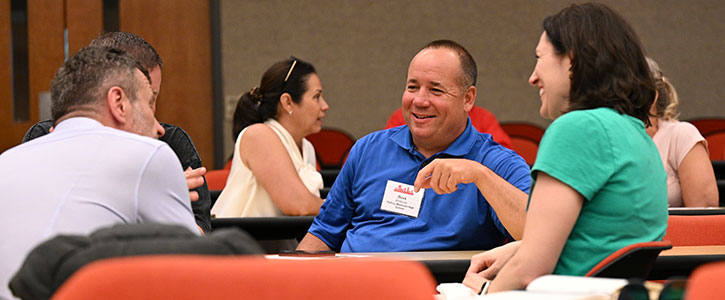

A teacher. A classroom paraprofessional. A principal. A school district administrator.
The four were among the close to 100 educators, including counselors and social workers, who came to the NIU College of Education to attend the Summer Camp for Responsive Education.
Eunice Matos has taught sixth-grade for most of her nearly two decades in School District U-46, most recently at Lords Park Elementary. This fall, she’s transitioning to teach sixth-grade math at a middle school.
Matos enjoyed meeting new people and engaging in conversations about their shared calling but especially appreciated her opportunity to enhance her understanding of how the process of teaching and learning has evolved.
“I like to always learn new things and be current with what’s going on. I started 17 years ago, and it’s very different – the then from the now – and you, as a teacher, need to always be progressive and always look for ways to support your students by learning and improving and growing,” Matos said.
“That’s how you are going to be a better teacher who provides better services for your students,” she added. ‘It’s learning who your students are, what their needs are and being very culturally aware of their background. We need to be able to learn from them so that we can teach them.”
For Abdul Muhammad, student engagement officer at Markham-based Prairie-Hills Elementary School District 144, the main takeaway from camp includes knowledge and tools that he hopes will improve the outcomes of his work.
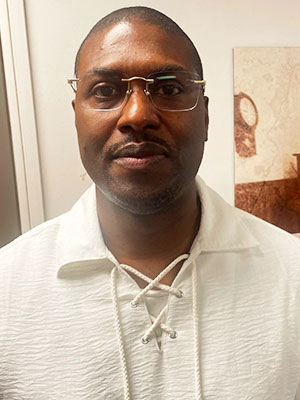
“I engage with parents. I also engage with students. I mediate problems the students might be having amongst each other. Truancy issues. Absentee issues,” Muhammad said.
“ ‘Restorative practice’ will give us the patience that we need when we are interacting with children, especially children with behavior issues,” he added, “and just give us a better course of direction as opposed to being punitive so quickly.”
Miguel Ochoa is studying to earn his bachelor’s degree and educator licensure.
He’s also worked the last five years as a para in a self-contained, special education classroom at U-46’s Sycamore Trails Elementary School in Bartlett.
Ochoa felt drawn to the camp “to be more involved and aware of how to be a better educator regarding responsive education.”
“I feel like it’s such an important topic right now. There just needs to be a change in the way the education system works,” Ochoa said, “and I want to do my part as much as I can to be a part of that.”
Like Matos, he appreciated the almost-instant camaraderie built between campers from several districts and diverse situations as well as the honest dialogue.
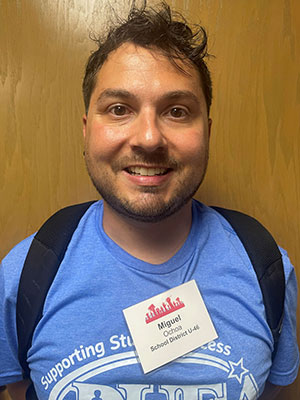
“I’m hearing their experiences and stories, and how they’re applying what they’re learning. I’m like a sponge right now absorbing all of that information,” Ochoa said.
“The more aware I am, and the more I learn about responsive education, the more I can share that with my colleagues. I can share it with my building,” he added. “I also can implement these practices and become that better educator to do what I can do to fix the system that we have right now that just isn’t working for all of our students.”
Laura Young is beginning her third year as principal of Littlejohn Elementary School in DeKalb Community Unit School District 428.
Young came “to gain more knowledge about culturally responsive teaching and how I can implement it into my school with my staff first and my students, really just to make sure they are feeling supported, seen, heard and valued the minute they walk into my building.”
What that will yield, she said, “is success – or at least being able to see their possibilities.”
“We have kids coming in at 5 years old who are still just learning who they are as a person,” she said, “and we’re able to foster that idea of who they are and where they belong and then to be able to see themselves as they grow and what their options are outside of what they see in the walls of our school.”
But Young’s prime motivation to enroll in the camp “is just really looking at myself and what are my implicit biases,” she said, “and how do I take that and grow that into supporting everybody else.”
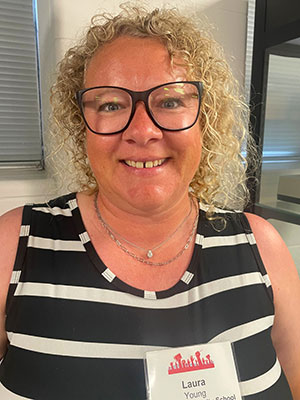
For example, she said, “I had some really great conversations with some colleagues about our hiring process. It was as simple as who is on the team and how we are vetting our questions. What are we learning about a candidate that’s not just at face value?”
Meanwhile, “we also talked a lot about discipline and how we are ensuring that the procedures and systems we have in place are supporting all of our students and not just the students that those systems were originally built for.”
“How has our school system grown? How can we fight that battle to ensure that it is supporting all of our students, regardless of gender, race, age, socioeconomic background,” Young said.
“It’s going to make me a better person,” she added, “because I think that the camp opens your eyes to what you’ve known for so long – what you grew up in – and then it just makes you more aware of the work that you’re doing and the importance of the work that you’re doing.”
Such cognizance is key for her and others in her role, she said.
“As a building leader, you know you’re the face of what’s going on,” Young said, “and to fight for those changes, you have to be the one to lead those. You have to be the one who lives those practices.”