

Enrollment in the NIU College of Education is up 3.2% over last fall, powered by a 92-student jump in undergraduate population.
The total headcount now stands at a 10-year high of 2,642; of those, 1,412 are in bachelor’s programs and account for a 7% rise in that category.
“We’re proud of the significant growth in enrollment in the NIU College of Education,” says Carolyn Pluim, interim associate dean for Academic Affairs, who calls “this milestone success the result of several intentional efforts.”
“First, we’ve expanded pathways into teaching by strengthening partnerships with community colleges and school districts, which makes it easier for students to see themselves entering the profession,” Pluim says.
“Growth also has been particularly strong in Kinesiology, Physical Education and Sport Management, which continue to attract students interested in careers that blend health, performance and organizational leadership,” she adds of the current and future professionals who are preparing to supply the human resource needs of other job markets.
Sport Management added 26 while Kinesiology rose by 16, each building from an already strong base of more than 200 and, with Physical Education included in the tallies, boosting the Department of Kinesiology and Physical Education to its own 10-year high in overall enrollment of 721.

Pluim also gives “credit to our fabulous advising team – undergraduate and graduate – for their supportive role so that our students receive clear guidance throughout their experience from when they enter the College of Education through graduation.”
Dean Mary Earick is thrilled by the report.
“I’ve already found so many reasons confirming for me that the NIU College of Education is an amazing place of teaching and learning, and these positive enrollment numbers are adding to my joy,” Earick says.
“I congratulate the faculty, department chairs and staff for their hard work and willingness to meet our students where they are and to innovate and strengthen our external partnerships,” she adds, “all of which fit perfectly in my mission to build and nurture thriving communities.”
Main contributors to the good news at the undergraduate level:
- B.S. Sport Management
- B.S. Kinesiology
- B.S.Ed. Physical Education
- B.S.Ed. Special Education LBS I
- B.S.Ed. Middle Level Teaching and Learning
- B.S.Ed. Special Education: Visual Impairments
- B.S. Applied Management: Instructional Technology, Training and Evaluation
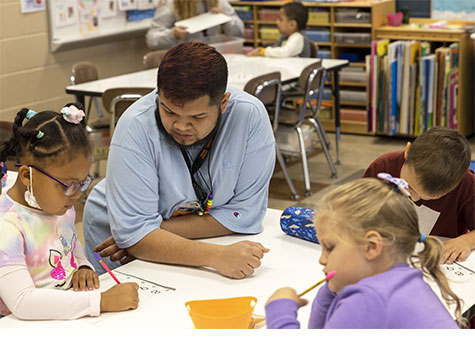 Growth in licensure majors reflect not only attention to the field but also a commitment to representing the region NIU serves and the changing face of the nation.
“Our faculty have looked at academic programs to align with the needs of today’s schools, emphasizing innovative instructional practices that are paired with strong clinical and leadership experiences,” Pluim says.
“We’ve made a concerted effort to highlight the value and impact of a career in education through outreach, recruiting and community engagement/partnerships,” she adds, “which has helped us attract students who are deeply committed to making a difference but also might have not historically seen themselves in the field of education.”
Part of this boom comes from enrollment in the B.S.Ed. in Special Education LBS I program.
The federally funded Northwest Illinois Rural and Small-Town LEAP (Licensed Educator Accelerated Pathway) initiative, along with a similar program in partnership with East Aurora 131, combined to welcome 40 paraprofessionals in pursuit of bachelor’s degrees.
Meanwhile, NIU undergraduate students continue to have interest in College of Education minors. Enrollment in the minor in counseling, for example, climbed to 150 – a 42.8% growth since 2023.
Several graduate programs also posted impressive gains, including the M.S.Ed. in Literacy Education Reading, Ph.D. in Kinesiology and Physical Education, the Ed.D. in Educational Leadership and Policy Studies and the M.S.Ed. in Special Education: Behavior Analysis.
“Our graduate programs are reflecting the growing demand for advanced training to prepare professionals for leadership roles across educational settings,” Pluim says. “This momentum underscores the college’s ability to adapt to student interests and workforce needs while strengthening its role as a leader in educator preparation.”
Pluim is encouraged by the continued ascent in overall enrollment and credits faculty and staff who “have created a welcoming, supportive environment that not only draws new students but also helps them thrive and successfully graduate once they join our programs.”
“I believe this year’s growth signals that the College of Education is overcoming what has recently been a challenge, which can reframe our identity from being in ‘maintenance mode’ to being seen as an institution of innovation and momentum,” Pluim says.
“This creates multiple opportunities to celebrate success publicly, enhancing our reputation among prospective students, our partners and donors,” she adds. “Leveraging this energy to retain these students and graduate them successfully provides a steadier pipeline of skilled professionals who will positively influence and effectively advocate for their communities.”
