

Colleen Cook and her fellow Ed.S. in Educational Administration students always enjoyed the presence of guest speakers from Clinical Assistant Professor Lynn Gibson’s professional network.
Gibson, who led Hononegah Community High School District 207 from 2012 to 2018, and who recently served as interim superintendent of Paw Paw Community Unit School District 271, knows a lot of people.
“Lynn had a couple of sessions where we had either current sitting board members, current sitting superintendents, retired superintendents, as well as her being a retired superintendent,” says Cook, EC-5 director of Special Education in Elmhurst Community Unit School District 205.
The students wanted more of the same – and they had an idea.
Would Gibson and Ben Creed, assistant professor of Educational Administration in the Department of Leadership, Educational Psychology and Foundations, please create a semiannual, online gathering where aspiring superintendents could meet the current practitioners, explore pressing issues, gain insider insight and, in the process, augment their own knowledge and build their own networks?
“Yes” was the reply.
“In classes, you get the logistical part of what you have to do in order to be a superintendent, but you don’t always get the information of what you need to be worried about during certain times of the year and what practical experiences people have had,” says Cook, who completed her Ed.S. last summer and now is in pursuit of her Ed.D.

“For me, it’s been an opportunity to hear from current sitting superintendents and how they’ve navigated difficult situations. I want to know what I’m getting into if I take on that role and hear the good, the bad and the ugly of the position,” she adds. “When you move into administration, or up into the superintendency, you don’t know what you don’t know, and so it’s kind of trial by fire if you don’t have a strong core of surrounding administrators who can help you through.”
Early-evening sessions began via Zoom in the fall semester of 2021; the fourth took place this spring, featuring a deep dive into the educator shortage.
NIU’s aspiring superintendents provide many of the discussion topics, Gibson says, and she and Creed then match those suggestions with people who bring the best expertise, including members of school boards.
“We generate the list from the students telling us what they are interested in, but also from what Lynn and I think is relevant given our networks, our conversations and our perspectives,” Creed says. “These are people whose doors you’re going to want to knock on when you become a superintendent, so let’s introduce you so you know who to reach out to – and that they’ll maybe already have a connection in seeing your name.”
Past topics have included the interview process for superintendents (featuring speakers from professional search firms) as well as the first 90 days of the superintendency.
Sometimes, the guest speakers include the aspiring superintendents themselves.
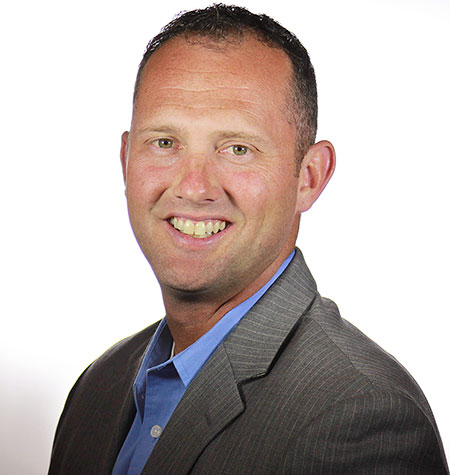
Matt Zediker, chief Human Resources officer for Rockford Public Schools 205 and a student in the Ed.D. in Educational Administration program, was a panelist during this spring’s meeting.
Zediker, who completed his Ed.S. in 2022, spoke on how school districts are impacted by teacher shortages and how they respond – a challenge he compared to “an arms race.” The agenda also included definitions of shortages, a look at the national and statewide landscape and perspectives from Springfield and school building levels.
“I’m in a unique position where I do get to experience some of the job of a superintendent. I have a lens into at least what it looks like and feels like in our district,” Zediker says.
“But to be able to hear experiences from board members and other districts, or folks who sit in my position in other districts, is really enlightening in terms of how things are sometimes similar and sometimes very different,” he adds. “The ability to learn, and to ask questions, is really a positive.”
He appreciates the glimpse beyond his HR silo.
That includes listening to personal stories of how department heads interact with superintendents to make and communicate decisions, how to know when it’s necessary to consult outside legal counsel or examining the political landscape for elected school board members with voters, stakeholders, superintendents and cabinet members.
“It gives me a better perspective on what are some things we in Rockford are doing that are similar and what are some things that we’re doing differently, and whether that’s good, bad or just different,” Zediker says. “It’s really given me some insight into the broad scope of running a district.”

Gibson considers that mission accomplished.
NIU’s coursework for the Ed.D. is “pretty heavy-duty,” free of “busywork” and “targeted for what they need to know, because I think that’s important,” Gibson says, “and so, with this, I hope they’re able to take what they’re learning in their classes and related it to what these speakers and presenters are talking about.”
She also emphasizes connecting names with faces to construct professional circles.
“One of the things I would like to see come out of this is that they’re building their network, because they’re going to be superintendents,” Gibson says. “They will need that strong network for questions that they don’t understand what to do with, or when they’re in a quandary as a superintendent that they’ve got to work through. Finding out from others what they’ve done in those situations is a big piece.”
Meanwhile, she adds, “part of this is lifelong learning. We want them to continue to learn and grow, and one of the best ways to have that happen is to demonstrate what that looks like and to make them a part of that.”
Part of that comes through a level playing field created by the Aspiring Superintendents group, Creed says, and “seeing that you’re like a lot of these folks.”
“I think that they probably often see themselves as the experts in a room or having to filling that role,” he says, “and I think that by placing them in their professional roles, and placing them in these situations where they can learn from others who are lateral, opens up their eyes a bit to who they can learn from and how they can learn.”
FOR COOK AND ZEDIKER, the paths to their current roles are diverse as are the school districts they serve.
 But, through their NIU coursework in and out of the classroom, they have become trusted colleagues.
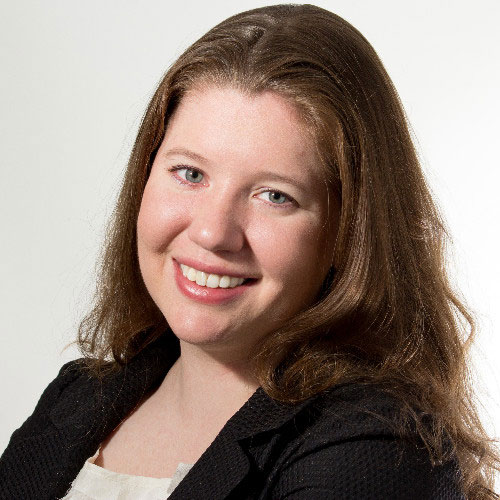
Cook began her career in 2005 as a special education teacher in Addison, where she spent five years before relocating to Berwyn for one more year in the classroom. She became a diagnostic resource consultant after that, a shift that launched her into administrative positions.
A decade later, she is now completing her fourth year in Elmhurst following six years as a special education administrator in Berwyn.
“On my journey, I think I’ve always known that I wanted to be a special education administrator,” Cook says. “Being a special education teacher, you’re able to impact deeply, I would say, the lives of a very small amount of students. As you move into roles either at the school or district level, you’re able to support not only the lives of more students but now families and other staff members.”
While she is uncertain whether the superintendency lies in her future, she is eager to become an assistant superintendent for special education or student services – and grateful for the NIU programs making that possible.
“What’s been really nice for me, because I’ve always been in the special education world, is to take a step out and look at education holistically. It’s nice to see the whole facet of the student, the families, the stakeholders and the staff, and how you can support them as an administrator,” Cook says.
“I was very specific when I did my internship to get myself involved in general education initiatives so that, when I decide to go up and try for a position as a superintendent or an assistant superintendent, that I’m able to speak about education as a whole and not get pinned as only a special educator.”
 Zediker, meanwhile, taught elementary school and served as principal or assistant principals of buildings across the K-12 spectrum.
His career began in Iowa City before he came east to Illinois, starting in Freeport School District 145. He has been with Rockford Public Schools for two decades, years in which he also earned his M.S.Ed. in Educational Administration from NIU.
“NIU does a really nice job of adding faculty who can add context to exactly what’s being talked about in theory and in books, and in being able to have folks who can demonstrate how to apply that in real-life practice,” he says.
“Lynn, having been a superintendent, offers a wealth of knowledge. On more than one occasion, she’s given examples about things that occurred in her district and how she set up communications with the board to prevent, or to be proactive in mitigating, those situations,” he adds.
“What’s interesting about Ben is the amount of research he’s done. Bringing an outsider’s lens to connect that research with different districts, different types of districts and district leaders gives him a robust knowledge set to add provoking questions to situations that we, as practitioners, get in the day-to-day and sometimes forget about stepping back to think about some of the larger issues that we’re dealing with.”
That “stepping back” process already includes reaching out from urban Rockford to suburban Elmhurst and vice versa – or between whatever districts the aspiring superintendents call home.
“Being able to learn from folks in different settings, and networking, is vital,” Zediker says. “It’s about, ‘Hey, I have somebody that I have a personal connection with,’ and, ‘Off the record, here’s what I’m dealing with. Have you experienced something similar? How did you handle it? Do you have any words of wisdom – or about where you might have made mistakes?’ ”
Forging “that web of individuals and professionals who can be available to you is a complete benefit,” he adds.
“Any time you have leaders connected on best practices and on situations allows you to navigate and lead your community through those situations a little bit more confidently. The fact that we’re able to connect with folks, ask questions and learn from to put your plan together provides better district leadership teams for our communities.”
Cook confirms the notion of confidence found in “having these kinds of people in my corner and knowing that these are people I could reach out to if ‘this’ happens.”
“The thing that makes me the most nervous about becoming a superintendent is the feeling that you have the whole district right on your shoulders, so I think that NIU does a really nice job finding people to collaborate with throughout their journeys so that you have people to lean on,” she says. “If it’s a staffing concern, Matt Zediker is my first person that I’m going to.”
She found inspiration of what Zediker told the spring gathering of Rockford innovations to address the educator shortage: Signing bonuses. Enabling paraprofessionals to earn licensure. Recruiting from affinity groups and communities of color.
“Sometimes it’s just thinking outside the box,” Cook says. “When you’re in one district for so long, you kind of think that your way might be the best way, and so sometimes it’s about hearing from other people and thinking how you could adapt that to work in the community you’re in.”
 Creed and Gibson will continue the Aspiring Superintendent Forums again during the 2023-2024 school year.
- Connecting the classroom with real-life situations is an effective way to equip our upcoming superintendents with the skills and mindset needed for that position.
- Additional relevant topics are under consideration pending the requests of NIU’s aspiring superintendent students.
For more information, or to receive an email invitation to the Aspiring Superintendent Forum, contact bcreed@niu.edu or lgibson2@niu.edu.
