
The 20th cohort of NIU’s School Counselor Institute (SCI) will finish this spring.
Launched in 2005, the program enables licensed clinical mental health counselors to earn their Illinois Professional Educator Licenses and School Counseling endorsements without pursuing a second master’s degree.
Students complete their coursework in one calendar year of online and mostly asynchronous classes along with an internship. The curriculum is grounded in social justice and advocacy, helping students strengthen their identities as school counselors who will support the emotional and mental health needs of the K-12 population.
Making the program attractive beyond its expedited and virtual path is the opportunity to work with young people – even at the early childhood level – and to become more enmeshed in their lives to address concerns of everything from academics and study habits to anxiety, bullying, peer pressure and depression.
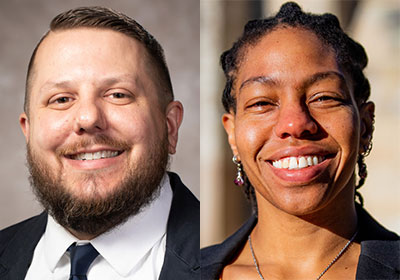
“Our skills in being a clinical mental health counselor and being a school counselor are somewhat similar. We use our facilitative responses and foundational counseling skills. We have a theory that guides us,” says TJ Schoonover, SCI coordinator and assistant professor in the Department of Counseling and Higher Education.
 “But what school counselors do – their day-to-day – is so much different,” he adds. “They follow the American School Counseling Association National Model, which provides the structure to create a comprehensive school counseling plan.”
Included in that blueprint is the establishment of goals, objectives, mission statements and vision statements, he says, as well as the need to collect and analyze data to track how well students are performing in terms of absences, behavior referrals and academics.
Counselors then can present that information to administrators to not only address gaps in school programming but also to advocate for themselves and the value of their work.
Another difference for school counselors is visiting classrooms to teach, Schoonover says, whether it’s lessons on social or emotional topics or academics. That’s why NIU’s program provides preparation in pedagogy and classroom management.
Kimberly A. Hart, SCI admissions coordinator and clinical associate professor, credits the responsiveness of NIU and Toni Tollerud, who retired in 2016 as interim associate dean of the College of Education.
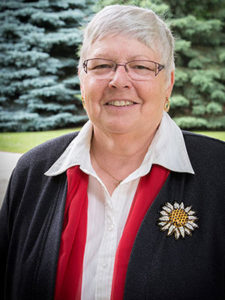
For generations, Hart says, the “guidance counselors” who helped students to determine their post-secondary paths held teaching degrees.
Eventually, she adds, the work evolved “to look at, and attend to, the ‘whole’ of the person and the system” – and, with that, the field recognized that the skills of a master’s degree in teaching were not necessarily what school counselors needed.
“When the licensure law changed and removed the requirement to have been a teacher to become a school counselor, the School Counselor Institute at NIU was one of the few programs across the state and nation that emerged to create a pathway for individuals who weren’t teachers but were really interested in working in schools with school-age children,” Hart says.
“It’s amazingly rewarding to see students feel more connected to themselves, and to experience a sense of agency and empowerment in their learning space, and to have someone they can be honest and vulnerable with and who’s available,” she adds.
“School counselors may only see some of their students five or 10 minutes once a month, but it’s that moment they needed – being able to create space with you, the smiling face or the ‘hello’ in the lunchroom when no one else has been paying attention to them or they’re having a rough day.”
Until three years ago, the coursework was delivered in a summer-intensive format with two weeks of eight-hour days in the classroom.
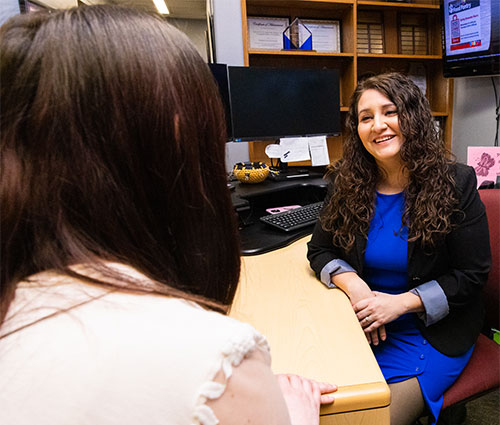
Moving online extended the SCI’s reach throughout Illinois, and when the 20th cohort finishes this spring, 30 students will have completed the program since the new era began.
That number climbs past 100 throughout the two decades, Schoonover says, which means that “more than 100 school counselors are out there now who wouldn’t have been if this program didn’t exist. They would have never done it, or they would have had to go back and complete another master’s degree.”
Good thing, he adds.
Like other states, Illinois is facing a shortage of school counselors. The ratio of students-to-counselors in 2023-24 stood at 479-to-1 while the recommendation is 250-to-1.
“The sites where our students complete their internships love our School Counseling Institute students because they have the confidence to go into a room and sit with somebody because they’ve already done the clinical work,” Schoonover says. “We’ve made a big impact with the sites they’ve been at. Our students have had strong connections with their students.”
 Vital connections also are built between SCI graduates and the staffs of the schools where they serve, Hart says, including with social workers who tap into the same system of resources to assist children, adolescents and their families.
“What also are the things that the school counselor and school social worker can be doing together, in tandem, to support teachers who are experiencing burnout and overload from the changes in curriculum expectations and fewer resources? All of those things impact our students, their health and wellness and the learning environment,” she says.
“There are also things beyond school counseling that intersect with our education system,” she adds, “so we’re really looking at having a sufficient amount of school counselors to support how their school buildings can have a healthy, functioning and developmental learning environment for all sides of the humans involved.”
