

After two years as a Social and Emotional Learning coach in Indian Prairie School District 204, Geraldine Troczynski is returning to the classroom this fall to teach eighth-grade English language arts and social studies.
Going with her is a fresh immersion in concepts of academic diversity, equity and inclusion, thanks to the NIU College of Education’s Social Justice Summer Camp 7.0.
“District 204 felt like this was an amazing opportunity, so they offered it up to the equity ambassadors,” says Troczynski, who holds that role for Fischer Middle School. “They paid for three of us to come to the camp this year.”
Why?
“There are a lot of needs that students are facing – social, emotional, academic, behavior – and I feel like there are lot of teachers doing the same exact things that have always been done. This morning, we saw the same issues arising today that were happening in education as early in the ’60s,” she says.
“It means we need to constantly learn and change to best support our kids,” she adds. “How can we continue to educate our educators in how to just change up little things that they might already be doing, and doing things better, so that we can help address those issues, close those gaps and make students feel safe, supported and welcome?”
Communication was her first step: “I’ve already been texting back and forth with my assistant principal about things that we can start implementing in the first few days of when we get back to school,” she says.
Her next move is implementation, which she hopes will “make a huge difference.”
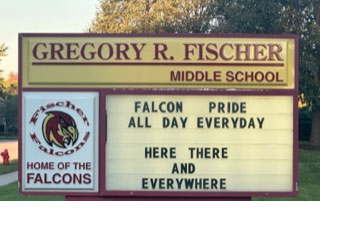 When Troczynski meets with her Tier II-behavior students to talk though the various disciplinary circumstances in which they find themselves, “a lot of them feel like they’re either targeted by teachers, or they don’t feel supported by teachers.”
“They always own their piece of things, but they get confused: ‘Why did this teacher do this in this situation? Why did she say this? Why did this happen?’ I don’t have answers for them,” she says, “but I think students will be happy to know that we’re learning how to do better for them.”
She believes that students at all the districts represented by the campers will agree, especially after listening to a Q-and-A with DeKalb High School students of color.
“Hearing from the student panel was extremely powerful. These are students who live an hour from where I teach, and they’re feeling the same types of things,” Troczynski says, “and in seeing how the educators in the audience were reacting, I saw like-minded people who have the same passions as me of wanting to make changes in education.”

Krystal Bush would include herself in that description.
Bush, about to being her fifth years as principal of Elgin Larkin High School in School District U-46, first attended the Social Justice Summer Camp years ago but returned last week “to see what was new.”
Doing so was important to her the former teacher of health, physical education, science and math.
“We need to see ourselves within the students,” Bush says, “and when students feel that their voices are heard – that they can advocate for themselves – we have seen a reduction in behavior issues. That is a win. Students feel as if they can achieve more, and that’s what we want. We want them to learn efficacy, understand who they are and that they can move to the next level with an understanding of what’s in store for them.”
As a building leader, she is eager to share the knowledge the gained and excited by the company that surrounded her on the NIU campus.
“My hope is that we walk away with a better insight of how to prepare as well as how to engage with our communities on a daily basis,” Bush says. “I think that this will help guide us in how we can further help our teachers to be better and to understand our communities.”

Yusra Said teaches ELL English to sophomores, juniors and seniors at U-46’s Dream Academy Alternative School.
“I wanted to learn more so I can infuse more social justice into the content of my classroom. We need to change our instruction. Our students are ever-changing and different, and we need to be more student-centered in our classrooms and our schools,” Said says.
“Also, thinking about our school as a whole, and as our building’s school improvement chair, I’m thinking about what we can do to increase our sense of belonging,” she adds. “We have a strong sense of belonging already – our Panorama data was pretty good – but we want to make it better.”
For Richard Collins, who teaches math and science to seventh-graders at Huntley Middle School in DeKalb Community Unit School District 428, better is always the goal.
That’s what attracted him to the camp at his alma mater, where in 2014 he earned bachelor’s degrees in elementary education and biological sciences.
Classes taught by Department of Curriculum and Instruction faculty James Cohen and Joseph Flynn, both of whom are among the co-directors of the summer camp, originally exposed Collins to inequities and realizations that “there’s always a story” behind students who are struggling.
“In a world where everybody knows who they are, and are completely accepted, and are given opportunities not based on their skin color, or the way they speak, or their religion – just who they are – makes this world a good place. It’s not a good place right now. It’s tough, and it’s getting tougher every day,” Collins says.

“If I can relate to my students of any background, they’re going to trust me enough to become educated, which gives them power in their lives,” he adds. “I think that’s the theme we’re hearing today – that education gives power.”
Collins was energized by “this sense of purpose” teeming among his fellow campers.
And, thanks to the student panel, he vividly saw the type of good that educators can do, how it matters and how to continue achieving it.
“Being yourself – being sincere – helps our kids,” he says. “They want to know that we care about them. They know it’s not always going to be good. We’re going to drive each other crazy – we do in our families, right? – but kids see fake. It may sound crazy, but if you’re a teacher in there just pretending, they’re going to figure you out.”
What’s more important, he says, is to remember that “this is all about them. This isn’t about us. We’ve lived who we are, and now we take what we were given, and we give it to them.”
“If you’re a teacher who’s shown them what’s expected, but you understand that it doesn’t fit everybody – it really doesn’t; every individual is different – and you really enjoy them for who they are, they’re going to listen. They’re going to learn. They’re going to grow. You’re going to impact their lives. If you force it, I don’t think you’re impacting their lives.”
 He speaks from experience.
Collins clearly remembers his own middle school days decades ago when he took math from Mr. Williams.
“I thought he hated me. He made me come to his lunch every day to work on math, and at the end of the year, I got to shave his face. He told me then, ‘I’m really proud of you,’ ” says Collins, choking up at the memory. “It took me years to really appreciate that man for what he did for me, and I hope to that for my kids. I hope we all do, because they deserve it. Being a teacher is the greatest thing I’ve ever done in my life.”
