
 Learn-IT was still virtual in 2022 – and organizers remain enthusiastic about some of the benefits of that online delivery.
The Department of Educational Technology, Research and Assessment’s annual workshop for pre- and in-service educators traditionally has been held the first Saturday in May in Gabel Hall.
Now, thanks to the internet and in response to COVID-19, it’s an international, asynchronous experience available for six weeks.
Meanwhile, for coordinator Hal Hinderliter, one aspect of the itinerary has evolved.
“Our focus this time is trying to bring light to the contributions of our recent graduates,” Hinderliter says, “as well as the friends and associates of our faculty – people we’ve worked on projects with, people we’ve done research with – rather than using our own faculty, as is often the case, especially when we’re having a live, in-person conference.”

Hinderliter also took the recommendation of professors Ying Xie and Olha Ketsman to include the voices of current students and alumni.
“We start this process by discussing at various department meetings with the professors, getting their input, thoughts and any ideas they might have. Dr. Xie suggested a panel discussion, and then Dr. Ketsman quickly said, ‘That sounds great, and I think there could be another panel of Graduate Student Association members.’ ”
Recorded on Zoom, the first panel discussion featured three ETRA alumni describing the process of producing research in conjunction with faculty members. Judy Puskar, ETRA’s academic program advisor, moderated.
GSA members, guided by Hinderliter, talked on their Zoom recording about the benefits of joining the organization and offered advice for new students.
“I was excited to give it a try, and I was very happy with the results,” he says. “Hopefully, we can look forward to panels being an integral part of all future Learn-ITs.”
“I just love that Hal did a great job of continuing the variety of having something introductory, something interesting and other presentations that really go into the depths of the field, and I love that Hal’s brought in the students,” Puskar adds. “To me, that’s a very rich and wonderful way to have a conversational style – and we have so many great students what I think this is really something I would like to see incorporated now.”
Despite the changes, much remains the same.

“We continue to emphasize low-cost, high-impact technology tools relevant to education, and we want to reach as many people as we can,” Puskar says. “I think it’s a great way to highlight all the different areas and aspects of our program, and it’s a great initiation to introduce people to our field. I really enjoy the flexibility of it, too, in that people can view it on their own time.”
Titled “Transforming Learning through Instructional Technology,” this year’s conference offered sessions under the themes of Instructional Design and Strategies, Technology and Culture and Learning Technology.
Among those presentations were “Immersive and Adaptive Learning in Virtual Space,” “Industry 4.0: A Brief Overview” and “Makey Makey, the Black-Hole Time Machine.”
Keynote speaker Richard Mayer, distinguished professor of psychology at the University of California Santa Barbara, delivered an address on “Evidence-based Principles for Designing Effective Multimedia Instructions.”
Speakers receive a clear directive.
“When we’re sending out the invitations to presenters, we say we are looking for short, impactful presentations and that our target audience is in-service and preservice teachers,” Hinderliter says, “The people who are presenting for us know who they’re trying to reach. It’s not academic speaking to academics at a doctoral level and just trying to wow each other with theory. We’re talking about things that teachers in the field can put into practice.”
Meanwhile, Puskar says, participants glimpse the breadth of NIU’s program in educational technology.
“It’s kind of like a quick smorgasbord of ETRA, and when our own students are curious about a topic, they can find out more in one of the sessions. It’s something for everybody,” Puskar says. “This is just a great way to be exposed to the real research that people are doing and the way they use technology.”
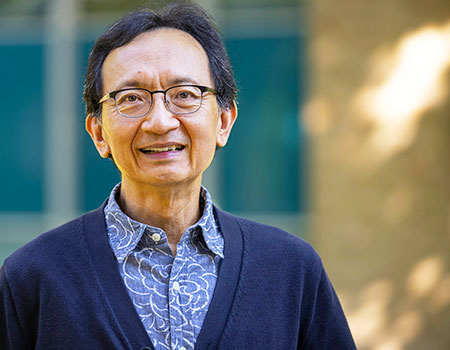
Hinderliter agrees.
Under the leadership of ETRA Chair Wei-Chen Hung, Learn-IT represents the Department of Educational Technology, Research and Assessment’s “ongoing commitment to expanding our field and focusing on topics of the moment that are useful to practitioners in education,” he says.
“Because of that, Learn-IT allows us to reach not only other professionals in the field,” he adds, “but also people who are interested in instructional design. They can find out that our program is alive, active and strong by attending Learn-IT, or by at least knowing that there is such a thing going on.”
Those who attend can promote their new skills and professional development credits with virtual Learn-IT e-badges compatible with Badgr, LinkedIn and a host of other sites.
“Jason Underwood has been extremely crucial in helping us to get the badge set up,” Hinderliter says. “None of that would have happened without Dr. Underwood’s efforts, and we really appreciate his help there.”
