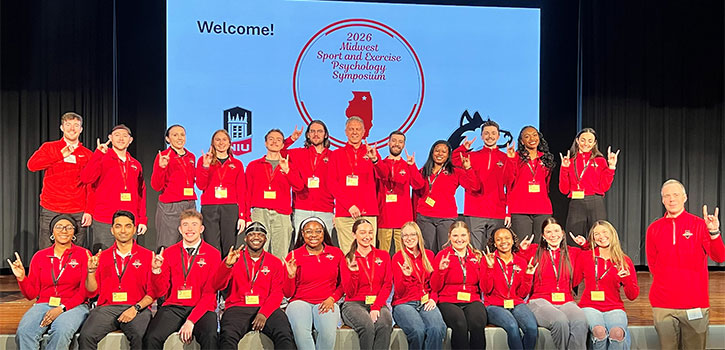
 Twenty-five students in the Department of Kinesiology and Physical Education planned and hosted the 2026 Midwest Sport and Exercise Psychology Symposium (MSEPS), which came to NIU for the first time in the event’s 35-year history.
Held March 6 and 7, the student-led, student-focused conference is designed for individuals interested in, or actively pursuing, careers in sport, exercise and performance psychology.
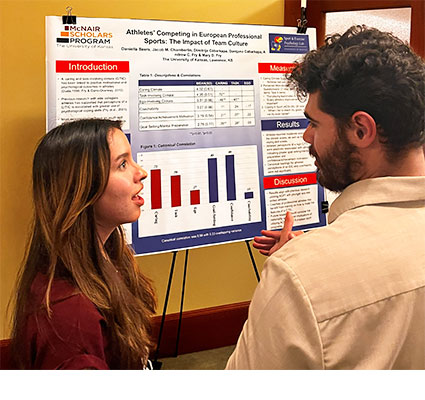
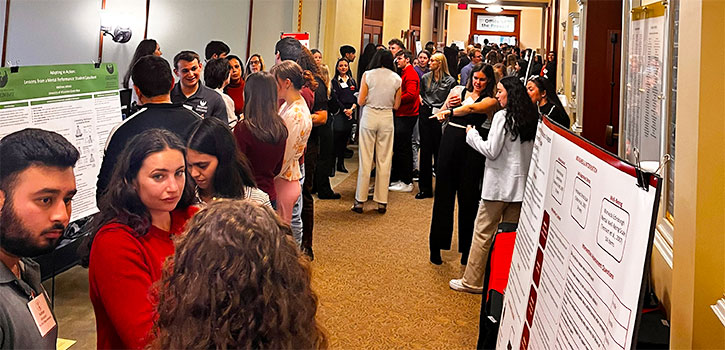
Nearly 275 undergraduate and graduate students and faculty from dozens of Midwestern institutions enjoyed opportunities to present posters, receive feedback on ongoing research, attend talks, build professional networks, gain mentorship and engage in meaningful dialogue.
“MSEPS gives students a really good opportunity to practice presenting their research,” says Grace Louis, who successfully defended her doctoral dissertation only three days after the event and served as co-chair of the planning committee with Ph.D. students Jeremy Charles and Jordyn King.
“Some of them were just presenting research proposals,” she adds, “and I think that was a good experience for students to think of research ideas and how to complete those. Being able to speak it out loud is a big step, and getting feedback from professionals is huge.”
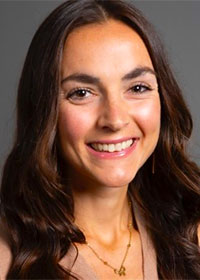
Louis, Charles and King were supervised in their work by Shaine Henert, associate professor and Kinesiology Program director.
“I think I was maybe more nervous than the rest of the group because I’m a little bit of a perfectionist when it comes to certain things. I just wanted us to do well, and I think we did an excellent job,” says King, in her second year of the doctoral program specializing in sport and exercise psychology.
“Presentations went well. The table talk speakers went well,” she adds. “All of our grad students were extremely helpful with communication, making sure everyone knew where to go and what to do – even showing up every Wednesday for meetings, and just getting the tasks done – so I was definitely grateful. We couldn’t have done it without this entire group.”
Charles heard positive feedback from attendees – and remains most energized by connecting with Robin Vealey, professor in the Department of Sport Leadership and Management at Miami University in Ohio, who joined Pete Kadushin, manager of Learning and Development for the Chicago Blackhawks, in serving as keynote speakers.
“For me, the biggest smash hit was Robin Vealey,” says Charles, a first-year doctoral student.
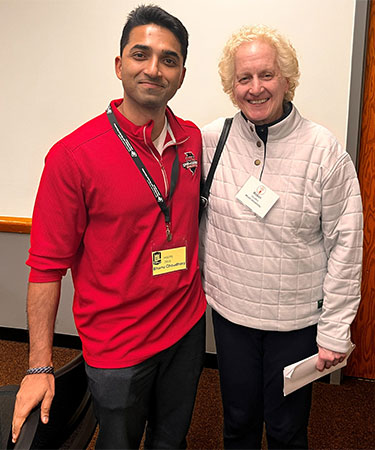
“Everybody loved Dr. Vealey – what she spoke about and even how she just went about the conference,” he adds. “Right when she got there, she came up and introduced herself to me, and knew my name before I even met her, which to me was one of the coolest things. I was like, ‘How does she know who I am?’ ”
All three learned from the task of leadership.
Responsibilities included logistics such as choosing and reserving the locations on campus, arranging for the keynote speakers and contracting for food service.
Other work required the review of 98 research abstracts, which Louis says was “probably the largest abstract pool of all time.
“We had a lot of student interest in presenting, which is neat because it’s a student-focused conference, and that kind of enthusiasm was awesome,” says Louis, who will join the faculty of the University of Cincinnati Blue Ash College this fall as director of the Sport Administration program.
“But it also was a big, time-consuming part of planning,” she adds, “because we had to figure out how to put them into breakout sessions, who was going to present a poster, who was going to do oral presentations, who was going to do workshops.”
King sees the process as valuable for the future.
“I learned that it’s a lot easier to get the job done if you delegate and delegate well. You don’t try to just do things on your own but to give each team member a role and a task in order to carry out the overall outcome goal,” says King, whose goal is to become a professor. “If I’m at a university that hosts MSEPS or a similar conference, I have that experience under my belt.”
She also feels well prepared for the planning committee, and for her eventual career in higher education, thanks to her background in sports: King came to NIU in the fall of 2022 to complete her fifth year of NCAA Division I women’s soccer.
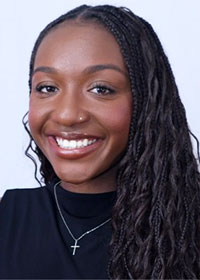
“Being former student-athletes, we know that everyone on a team has their different roles. There’s no ‘I’ in team. There’s not one person on a team,” she says.
“Anywhere we work, and anywhere we go, we’ll be working with groups of people. Some people can do things better than the next person, and so through appealing to people’s strengths and weaknesses in order to get the job done, you’ve got to work together.”
Doing so “is part of being a good leader. If you just try to do everything yourself, you’re not really leading, so it was a good exercise in trust as well.”
Henert is thrilled by the outcome and proud of the students.
“I felt like it couldn’t have gone any better than it did, and that’s a testament to our students,” Henert says.
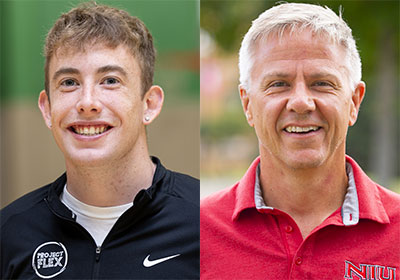
“Everybody pitched in and took a role – or several roles and responsibilities – and that allowed me to walk around and interact with students, which is a valuable experience both for me and for the students from other universities,” he says.
“MSEPS helps build their confidence and their ability to see themselves, and the faculty at these conferences, as accessible and knowledgeable, and that what they think about and what they talk about matters,” he adds.
“It gives them a clearer understanding of what our field is, what the major issues and research topics are and the career paths. It gives them a sense of direction. Seeing others in the field allows them to visualize themselves in the field – as a professional – which is something that we’re not always able to provide in classes.”