
 A book club formed in January is part of the College of Education’s sustained work to cultivate a healthy climate of belonging.
Director for Equity Eric Junco worked with department chairs Suzanne Degges-White and Bess Wilson to lead their colleagues through a deep dive into “Belonging: The Science of Creating Connection and Bridging Divides” by Geoffrey L. Cohen.
Their group conversations and continuing activities toward academic unity now constitute the origins of a burgeoning Faculty and Staff Belonging Committee that will strive to intentionally integrate belonging into functional systems and interpersonal relationships.
“In a landscape often divided by discipline and hierarchy, the imperative to create inclusive communities within higher education has become more important than ever,” Junco says.
“When I learned that universities like Stanford and Harvard were discussing Dr. Cohen’s book to help them better design their college cultures, I knew it was an excellent way for us to learn about operationalizing the belonging here within the COE,” he adds. “One of the biggest challenges for us has been identifying practices that not only support students, but ones that could support everyday faculty and staff interactions within the College of Education and beyond.”

Members of the book club include Chris Lowe, director of the Office for Student Success, and Joe Curran, undergraduate advisor in the Department of Kinesiology and Physical Education.
Several themes focused their discussions: Contextual Belonging; Gender and Communication; Intentionality in Engagement; Personal Validation; Small Gestures; Community Building; and Wise Feedback.
Each is key to supporting an institution’s overall well-being by making sure that all people know that their involvement matters and has value, Degges-White says.
“What really resonated was the truth that feelings of belonging can shift from interaction to interaction. This underscores the importance of being aware of how we are supporting and engaging others here,” says Degges-White, chair of the Department of Counseling and Higher Education.
“I’d like to see our community grow in their awareness of the value of helping others feel they belong. Everyone brings something different to a classroom, department, office and so on, and we should intentionally recognize and validate individual contributions,” she adds. “When we feel we are a part of something bigger than ourselves, it gives us a sense of meaning in our jobs, and this can lead to cohesion that supports personal and institutional growth.”
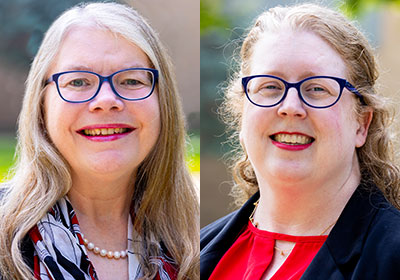
For Wilson, chair of the Department of Special and Early Education, the goal is open and honest talk “to better understand each other.”
“Belonging is determined not only by who and where we are, but also by how we are positioned in society and our personal histories,” Wilson says. “Navigating spaces that are as hierarchical as academia can be treacherous. My experiences have led me to reflect on what it might be like for people of other marginalized groups, and even more so the intersectionality of various groups, such as gender, race, class and sexuality, in academic circles.”
Lowe also found motivation in his own story.
During his graduate school days, he began to doubt not only his talent and ability but also his direction.
“I was struggling with a very real case of imposter syndrome. I was convinced that the other students around me were better writers than I was, that they belonged in that place and that I did not,” Lowe says.
“After a particularly rough fiction workshop where one of my early story drafts took some heavy and well-earned criticism, I went to my mentor and professor and told him I was considering leaving the program,” he adds. “In that moment, he shifted our conversation away from the specific criticism of that piece of fiction and to me as an individual – to me as a writer. We talked about why I wrote, what I wanted from my writing and why it mattered to me.”

His hope now is that the Faculty and Staff Belonging Committee can support current NIU students in similar ways.
“The Belonging Committee has the potential to amplify best practices and create conversations that can have real impact on those around us,” Lowe says. “Often, the difference between fostering a sense of belonging and negating it is something as simple as one party applying a strategy with intentionality. It might often seem like a small thing, but those small things accrue great meaning, and if we can all, as a community, embrace these approaches, I think the effects can be seismic.”
Curran agrees.
“I am always surprised at the depth of impact of NOT belonging or having that feeling of belonging can have on groups that are traditionally thought of as marginalized,” Curran says.
“Yes, it can impact everyone – that feeling of not fitting in or, perhaps worse, that feeling of being actively not wanted in the place you are in,” he adds. “But the impact that can have to people who already feel that in other aspects of their lives due to any number of other factors is just compounded.”
The challenge for higher education, he says, is the perpetual turnover of students.
“At minimum, every four years we are dealing with an entirely different group of students who had different experiences in their early education that brought them to where they are today,” Curran says.

“The ways we strive to make students feel like they belong in 2024 will likely took very different in the year 2028 and the committee has to constantly find new ways to make that sense of belonging work,” he adds. “We have to keep in mind that ‘belonging’ is not a destination that we reach and then look for somewhere else to go. It has to be a philosophy that is adopted: How to we make students feel like they belong? How to make sure that their time at NIU is valuable?”
One answer the group already has identified is “wise feedback,” Junco says.
Wise feedback is supportive and developmental, something crucial for marginalized groups.
“The great benefit of wise feedback is, I think, that is gives a kind of scaffolding for students,” Lowe says.
“We don’t expect construction workers to build buildings without scaffolding. We acknowledge that in this act, they need something extra to bolster the work that they do,” he adds. “I think of wise feedback as doing this kind of work for our students. As they develop and learn, that scaffolding can support the work that they’re doing.”
Doing so could prevent students from feeling burned out and unmotivated, Curran says.
“Being in college is difficult enough for students who are balancing work, their family obligations, figuring out the steps of their life to follow after graduation and manage their course work all at the same time. It can be very daunting,” he says. “Wise feedback provides faculty and instructors a set of tools to help students reach their learning potential without sacrificing academic rigor.”

