Burnout. Social anxiety. Communication barriers. Intimacy. Negative parental emotions.
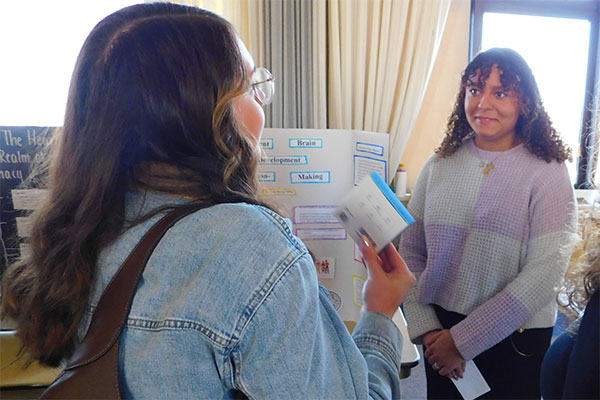
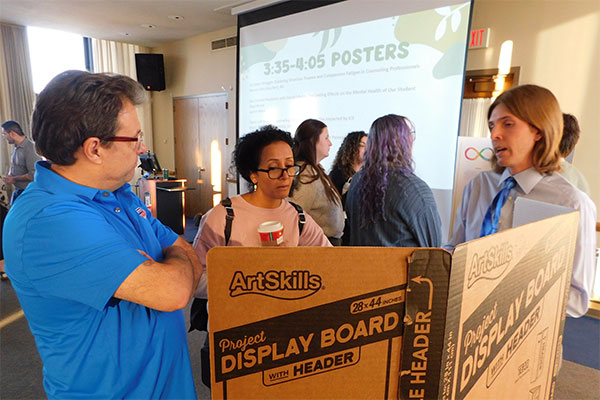
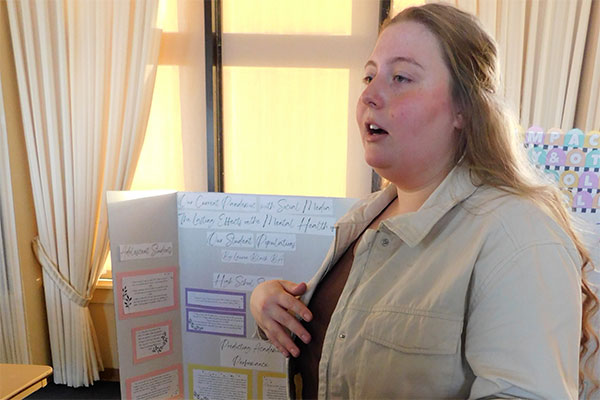
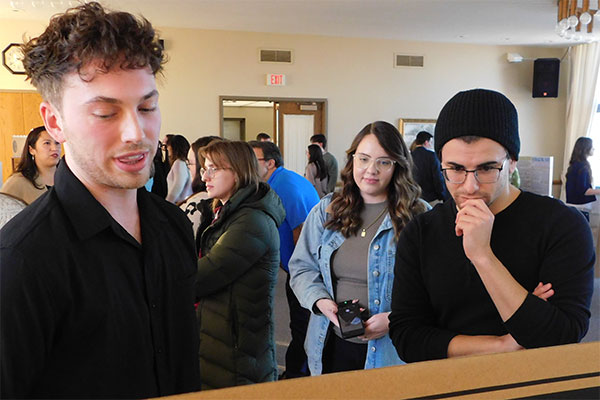
New graduate students in COUN 500: Professional Identity and Ethics in Counseling researched these topics and more for the course’s annual poster presentation, held Dec. 8 in the Sky Room.
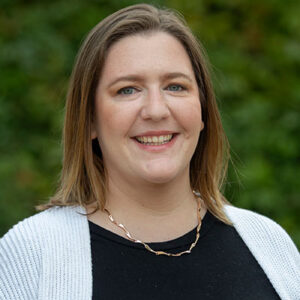
Melissa Fickling, associate professor in the Department of Counseling and Higher Education, created the assignment five years ago.
“I felt it was important to help students in their very first semester to understand they are part of a professional community of practitioner-scholars,” Fickling says, “and that the pursuit of their clinical interests and passions is an important contribution to our field. There are so many mental health needs in our world today that we truly need all of their unique perspectives and interests to develop.”
Fickling says their future careers, and their future clients, will prosper.
“The critical thinking, research and writing skills they develop when building their posters, as well as the sense of ownership of their topics, are important foundations I hope they build on as they are simultaneously developing their clinical knowledge and skills,” she says.
At the same time, she adds, “the ability to critically consume research, and to communicate it to both lay and professional audiences, helps to improve counseling services for the public.”
Jason Guerrero presented “Burnout: How, Who, Why,” which specifically examined the impact of job stress on nurses, physicians and teachers.
Women in these roles are 15% more likely to experience burnout, he says, partially the result of microaggressions in the workplace, lower pay and fewer opportunities for career advancement.

Guerrero offered an example of teachers during COVID lockdowns as they needed to quickly learn, use and manage the anxiety and frustrations of online technology on top of their already full plates.
He recommends self-care, practicing gratitude and remaining efficient in personal lives as possible remedies; companies and organizations also can help foster healthy work environments so that employees are less likely to become exhausted, he says, perhaps by allowing flexible hours or by providing counselors.
Counselors, he adds, are not immune – a critical realization for a professional in preparation.
“Burnout is pretty prevalent in counseling because you might take on too big of a workload,” says Guerrero, who is from Streamwood. “I will also be seeing clients who suffer from burnout, so knowing how it happens, and especially the ways in which it can be helped, will not only benefit me but also benefit the people I want to heal.”
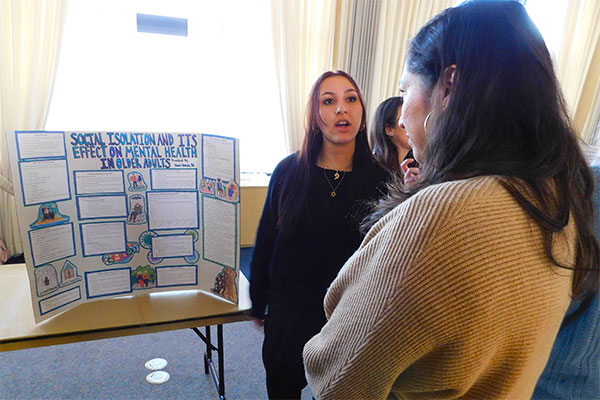
Sherri Wehde, who clocks weekend shifts at a retirement-living facility in Rockford, is debating whether to focus her eventual practice on young adults or the senior citizens she serves on the job.
Either way, the Belvidere native is eager to start.
“I just love helping people. I love listening to people,” she says. “I’ve always felt like that’s my passion.”
Wehde’s project, “Social Isolation and Its Effect on Mental Health in Older Adults,” explored the differences between the reality of social isolation and the more feelings-based emotion of loneliness as well as the impact on social isolation on physical, mental and cognitive health.
Caretakers have resources, she says, including technology and community gathering spaces, while medical professionals can assist by asking questions about the quality of their patient’s social interactions as a routine part of assessments of physical and mental well-being.
For her own part, she says, Wehde promises to consider how social isolation might result from cultural factors, family dynamics or life events such as the death of a spouse or a child or when children and grandchildren move far from home.
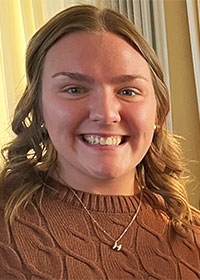
Hannah Jacoby wants to focus on the other side: children and adolescents.
Jacoby presented “Animal-assisted Intervention and Its Effects in Schools,” which sought consistencies in the literature on the academic, behavioral, cognitive and social-emotional benefits of furry friends in the treatment process.
She also examined the applications of four-legged counselors for students in special education, on the autism spectrum, diagnosed with attention deficits or those exposed to trauma.
“I would love to be able to do this one day in the future – to have a little sidekick with me, going to work and working the schools, connecting with the students in that way,” says Jacoby, who grew up in Sterling. “It’s really opening my eyes to a different form of therapy that’s in use. I know that from where I’m from that it’s becoming a bigger thing in the schools.”
Kenzie Citro also appreciates the chance to make a positive difference for children.
“Right now, I work at a domestic violence and sexual violence center with kiddos,” says Citro, who is from Yorkville.
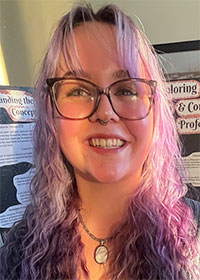
“Being able to work with them, and to see them grow and learn to trust me, and to see them be kids after experiencing the worst trauma I could imagine, is so meaningful to me, and I just want to help more kids to experience that,” she adds. “I love the non-profit work. I won’t be there forever, but I think it’s a good start for me.”
Her project, “A Hidden Struggle: Exploring Vicarious Trauma and Compassion Fatigue in Counseling Professionals,” provides critical information for those in the field.
Counselors are vulnerable to “secondhand traumatic responses within themselves where they can be at risk at taking on their clients’ trauma as their own,” she says.
“If you do fall victim, you might have difficulty in switching off when you leave from the work day,” Citro says. “Your body is reacting to the trauma you have experienced, and you’re not able to calm your nervous system – and that then can leak into your personal life, and you might have trouble just connecting with those who are close to you.”
Next, she adds, “I wanted to know a little bit more about what protects you from that.”
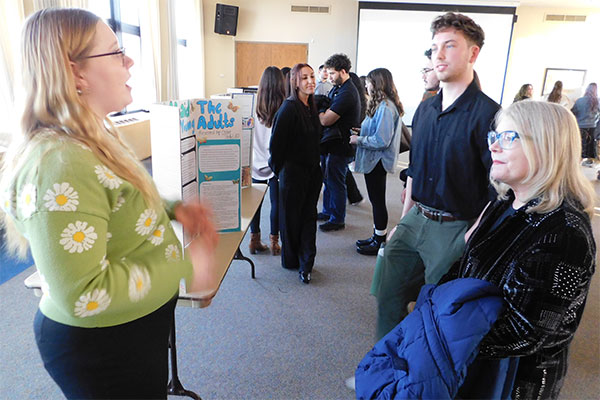
Like Jacoby also found, Citro says the possible answers include “developing a really good self-care routine” and enjoying “effective and informative supervision.”
“The most important thing was how common vicarious trauma and compassion fatigue are,” she says, “and, within the supervision aspect, it’s about creating a relationship with your supervisors, making sure that, while you don’t want to treat them as your own therapists, you have to be able to talk to them about what you’ve experienced and what you’ve witnessed with clients, because that’s the only way you can let go of some of the things your clients will tell you.”
And that’s powerful.
“When I have a supervisor,” Citro says, “this will give me more confidence in asking for what I need from them.”
OTHER PRESENTATIONS
- “Adolescent brain development and decision-making,” Alana Hercog-Gallego.
- “The Head and The Heart: Inside the Realm of Intimacy,” Amanda Bishop.
- “Alive but Afraid: The Death Dilemma in Young Adults,” Chloe Steffel.
- “Healing Under Lock and Key: Understanding Hospital-Based Treatments for Adolescents and Its Outcomes,” Esmeralda Vargas M.
- “Break on Through: Psilocybin-Assisted Counseling for Treatment-Resistant Depression,” Kirk French.
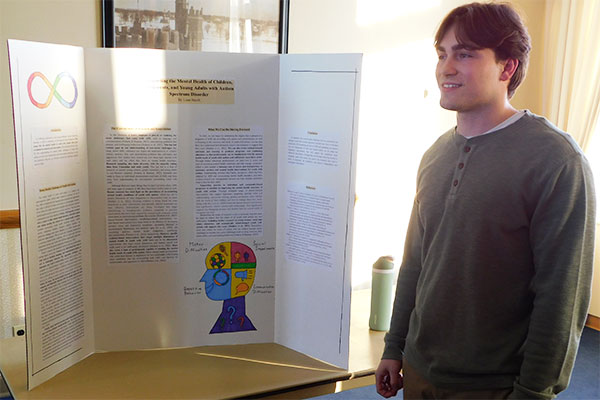
- “Supporting the Mental Health of Children, Adolescents, and Young Adults with Autism Spectrum Disorder,” Liam Smith.
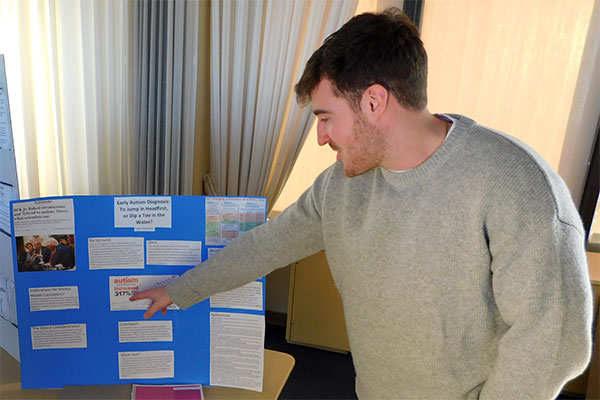
- “Early Autism Diagnosis: To Jump in Headfirst, or Dip a Toe in the Water?” Luke Fitzsimons.
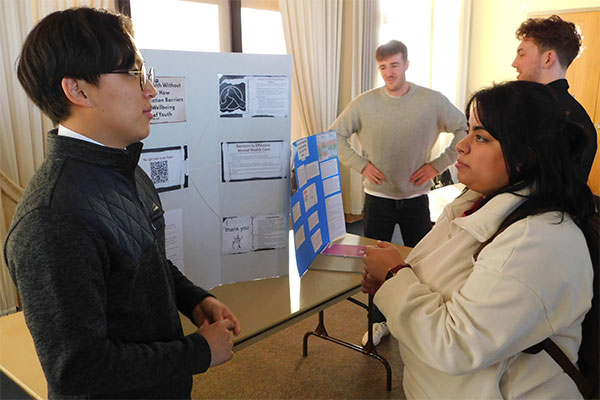
- “Mental Health Without Words: How Communication Barriers Shape Well-being of Deaf Youth,” Sam Lee.
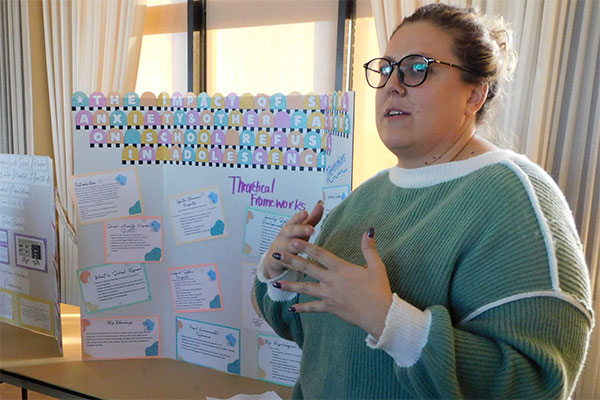
- “The Impact of Social Anxiety and Other Factors on School Refusal in Adolescents,” Alyssa Galvan.
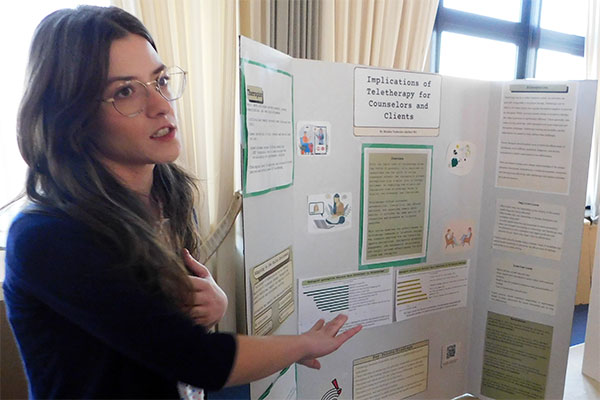
- “Implications of Teletherapy for Counselors and Clients,” Braiden Neubecker.
- “Art Therapy’s Effects on Self-Esteem and Aggression in Children and Adolescents,” Claire Dancey.
- “Decolonizing Therapy: Reclaiming Healing Beyond Western Paradigms,” Gordon Robinson.
- “Pathologizing Identity: How the Counseling Profession has Harmed Queer and Trans Communities,” Isabelle Van Winkle.
- “Our Current Pandemic with Social Media: The Lasting Effects on the Mental Health of Our Student Populations,” Lauren Black.
- “Those Left Behind – Counseling Children and Families Impacted by ICE,” María Valdez.
- “Do Parents Stress their Kids Out? The Impact of Negative Parental Emotions on Children,” Mark Guerrero.
- “Social Media and the Impact on Self-Image,” Sydne Shattuck.
Click on any image for a larger view.