

Project FLEX somehow continues to surprise Jenn Jacobs and Zach Wahl-Alexander.
More than four years have passed since the associate professors in the NIU Department of Kinesiology and Physical Education launched their initiative to deliver structured physical activity and positive life lessons to young men living at Illinois Youth Centers in the care and custody of the Illinois Department of Juvenile Justice.
They have grown from working with one graduate assistant to employing a team. They have presented internationally. They have brought FLEX participants to campus in DeKalb for up-close glimpses of college life, including attending class and eating in a residence hall cafeteria.
Yet as Jacobs and Wahl-Alexander now prepare to host a panel discussion on how they use sport as a healing tool inside several youth centers across northern Illinois, they find themselves savoring an unexpected perspective.
“Zach and I did a preparation call yesterday with two of the panelists who are no longer in prison, and it blew my mind,” Jacobs says.
“Just seeing them sitting in their homes, and in their own clothes versus the state-issued clothes we normally see them in, was like meeting a new person who we had known for so long – but in this new way,” she adds. “It was really cool.”
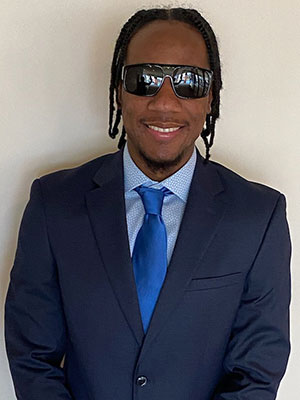
Diasee Scott and Malcolm Turner are those Project FLEX alumni, and both are among the speakers for “Beyond the Ball: Reimagining the Role of Sport in Juvenile Justice,” scheduled from 11 a.m. to 12:30 p.m. Thursday, Feb. 16, in the Sky Room of the Holmes Student Center.
Other youth who are currently or formerly incarcerated also will share their FLEX stories, as will St. Anthony Lloyd, a Project FLEX partner and director of leisure time activity at the Illinois Youth Center in St. Charles.
All are welcome, including people passionate about criminal justice, sociology, physical activity and community development. Email jmjacobs@niu.edu or zwahlalexander@niu.edu, or call 815-753-1407, for more information. Parking information is available at go.niu.edu/visitorparking.
Expect an eye-opening experience.
“There are a lot of stigmas and stereotypes that go with people who are incarcerated – almost all of them are false – and so everyone can learn a lot,” Wahl-Alexander says.
“The obvious is that you’ll get more of an insight into what it’s like in jail,” he says, “but the other piece is just getting to know that these are just kids. There’s no difference in these kids than in anybody else. They’re just like you and me. They just had some circumstances in their lives that, unfortunately, didn’t go their way.”
Meanwhile, he says, many also lacked “opportunities that a lot of people take for granted.”
“I knew I was going to college since I was in kindergarten. That was just the expectation,” Wahl-Alexander says. “I didn’t have to worry about if there was electricity, or if there was running water, or about going to school safely. I had all these things I took for granted just based on my ZIP code.”
FORTUNATELY, HOWEVER, INCARCERATION can lead to positive outcomes thanks to programming such as FLEX and the Illinois Department of Juvenile Justice’s own initiatives.

Some of those “outside-the-box” concepts keep the youth connected to their families in-person, over the phone, via computer or even on supervised home visits, says Thomas Hurley, assistant superintendent of operations at the Illinois Youth Center at Chicago.
“Our mission is to build youth skills and strengthen families to promote community safety and positive youth outcomes. Project FLEX’s role in helping us accomplish our mission is twofold: One is to build youth skills. The second is to strengthen families,” says Hurley, who traveled to Anderson Hall last fall to accompany some FLEX participants on a field trip to campus.
“Our real focus is on what skills we can build in them, be they life skills or more marketable skills, so that they can leave us and have a better reentry into society,” he adds.
“Part of that is just about exposure. What does a college campus look like? A lot of them had never seen one before, and now they have. They’ve had interaction with young adults who are not committing crimes but are pursuing academics. The interaction they have with the students and staff is so valuable. You can’t put a price tag on that.”
 Project FLEX is “a very intentional activity not just for the sake of exercise but with a purpose behind it,” Hurley says.
He supports its conditioning of appropriate conduct for participation, something that affirms the department’s Positive Behavioral Interventions and Supports (PBIS) framework.
“The intention is to protect the program because we want these to be good experiences. If we have fights happening or other nonsense, then no one can enjoy the program,” Hurley says. “It’s all about giving our youth rewards for the kind of behavior we’re trying to drive them toward. When you do well at a job, you get an opportunity for a promotion. When you do well at school, you get to be the valedictorian, or you get a diploma.”
OR, JACOBS SAYS, maybe an NIU degree: Diasee Scott, FLEX alum and Feb. 16 panel speaker, is a now prospective Huskie.

“That’s hugely transformative and wildly exciting,” she says.
“All of the work that went into him navigating the system, and coming to visit two times, and keeping in touch with us during his transition out of incarceration – and then the devotion of our graduate students, too, to help make that future possible? It’s almost like thousands of hours go into one kid, and to see that amount to something that that’s actually tangible, that could totally change the trajectory of someone’s life?”
Change is something she and Wahl-Alexander are accustomed to witnessing.
Sometimes it’s when a FLEX participant chooses to take on a leadership role, she says, or expresses an interest in diving deeper into a program component such as boxing, as panelist speaker Malcolm Turner did.
Other times, it’s just hearing voicemails on their office phones – messages that demonstrate “what kids are willing to do to stay connected to FLEX.”
“It’s really heartwarming,” says Jacobs, who believes the Feb. 16 event will prove that notion.
“The audience should expect to laugh. These guys are funny, witty, have impactful stories to tell and can be sarcastic, perceptive and comical all in one,” she says.
“Audience members should also expect to be moved,” she adds. “There were tears in our last rehearsal. They’ve lived tough, tough lives, but they always have this way of ending with something positive – so I think it will be an emotional experience.”

